The LIVVORA journal

The Safe Corner

Gentle reads for heavy days: journal prompts, healing guides and small rituals to come back to yourself.

DailyVerse of the DayA short verse and reflection to start your morning with peace.Read today’s verse →
  • 60 Healing Quotes for When Your Heart Feels Heavy

    60 Healing Quotes for When Your Heart Feels Heavy

    It’s late. The house is quiet, your tea has gone cold, and you’ve reread the same old message three times. You’re not looking for advice right now. You just want one sentence that understands what this feels like. That’s why we wrote these healing quotes: small, gentle words for when your heart feels heavy and you need a reminder that this won’t last forever.

    Every quote below is an original LIVVORA line, written for you to save, screenshot, or copy into your journal. Read them slowly. Take the ones that feel true and leave the rest.

    Why healing quotes help when your heart feels heavy

    When you’re hurting, long explanations can feel exhausting. A short line is easier to hold. It can name what you’re feeling, soften a harsh thought, or give you something kind to repeat when your own inner voice is not being kind. A quote doesn’t fix the pain, and it doesn’t have to. It simply keeps you company while you move through it.

    Here are a few gentle ways to use them:

    Healing quotes for the heavy days

    For the days when everything feels like too much and you just need permission to slow down.

    1. You don’t have to be okay today. You only have to be gentle with yourself.
    2. A heavy heart is not a broken one. It is a heart that loved fully.
    3. Some days healing looks like getting out of bed. That counts.
    4. Let the tears come. They are making room for something softer.
    5. You are allowed to rest in the middle of the storm.
    6. The ache is real, and so is your strength to carry it.
    7. Breathe in what you can hold. Breathe out what you can’t.
    8. Hard days are not proof you’re failing. They are part of the path.
    9. Be as kind to yourself tonight as you would be to your best friend.
    10. Even a heavy heart keeps beating. Yours is still here, still trying.

    Quotes for letting go

    For when your hands are tired from holding on to something that already ended.

    1. Letting go is not forgetting. It is choosing to finally set it down.
    2. You can love what was and still release what is.
    3. Not every ending needs an explanation to be complete.
    4. Release the story you hoped for. Keep the lessons it taught you.
    5. Some doors close so gently you only hear them later.
    6. You don’t need their closure to close the chapter.
    7. Let go one breath, one morning, one memory at a time.
    8. Holding on hurt more than you admitted. Letting go will hurt less than you fear.
    9. What leaves your life makes room for what is meant to stay.
    10. Unclench your hands. You were never meant to carry everything.

    Quotes for when you miss them

    For the quiet moments when a song, a scent or a street brings it all back.

    1. Missing someone doesn’t mean you should go back.
    2. You can miss them and still choose yourself.
    3. Memories are visitors. Let them come, and let them go.
    4. The longing will soften, even on the nights it feels permanent.
    5. Missing them is love with nowhere to land. Let it land on you.
    6. Their absence is loud right now. One day it will simply be quiet.
    7. It is okay to grieve a future that never arrived.
    8. Some people are chapters, not the whole book.
    9. You were whole before them, and you are whole now.
    10. Your heart remembers. Your feet can still walk forward.

    Quotes for coming back to yourself

    For rebuilding the most important relationship you have: the one with you.

    1. Healing is the slow art of coming home to yourself.
    2. The love you gave so freely is still yours to give to you.
    3. Return to the little things that made you feel like you.
    4. Your softness was never the problem. It is your gift.
    5. Choose yourself quietly, again and again.
    6. You are allowed to outgrow who you were when you were hurting.
    7. Pour into yourself the way you poured into them.
    8. The relationship you’re really rebuilding is the one with you.
    9. You are not too much. You were simply given too little.
    10. Light a candle, make the tea, write the page. Small rituals bring you back.

    Quotes for patience with the process

    For when you wish you were further along than you are.

    1. Healing is not a straight line, and you are not behind.
    2. Progress can be quiet. Be proud of the small steps.
    3. Some wounds close slowly. Slow is still healing.
    4. You don’t have to rush your heart. It knows its own pace.
    5. A setback is a day, not a direction.
    6. Every gentle choice today is a gift to the woman you’re becoming.
    7. Be patient with the parts of you still learning to trust again.
    8. You are healing even on the days you can’t feel it.
    9. Give yourself the time you would give anyone you love.
    10. Flowers don’t apologize for how long they take to bloom.

    Quotes for hope and new beginnings

    For the first small glimpse of light, and every one that follows.

    1. This is not the end of your story. It’s a soft turning point.
    2. One day you’ll look back and thank yourself for not giving up.
    3. Your heart is learning to open again, one morning at a time.
    4. There is still so much beauty waiting with your name on it.
    5. The light comes back. It always finds its way back.
    6. You are becoming someone your past self would be proud of.
    7. Healing doesn’t erase what happened. It lets you live freely beyond it.
    8. Joy will find you again. Leave the window open.
    9. You survived what you thought would break you. Look at you now.
    10. Your heart is still yours, and it is still beautiful.

    Try this tonight

    Before bed, give yourself ten quiet minutes:

    1. Scroll back through this list and choose the one quote that made you pause.
    2. Write it by hand at the top of a page.
    3. Underneath, finish this sentence: “This feels true because…”
    4. Close with one kind thing you’ll do for yourself tomorrow, however small.

    That’s all. No pressure to feel better by morning. You’re just practicing being gentle with yourself.

    A gentle closing note

    Heavy hearts don’t heal on a schedule, and that’s okay. Some days a single sentence will be enough to carry you through; other days you’ll need to read twenty of them. Come back to these healing quotes as often as you like. They’ll be here, and so will you, a little stronger each time. If the weight ever feels like too much to hold on your own, please reach out to someone you trust or a licensed professional. You deserve support.

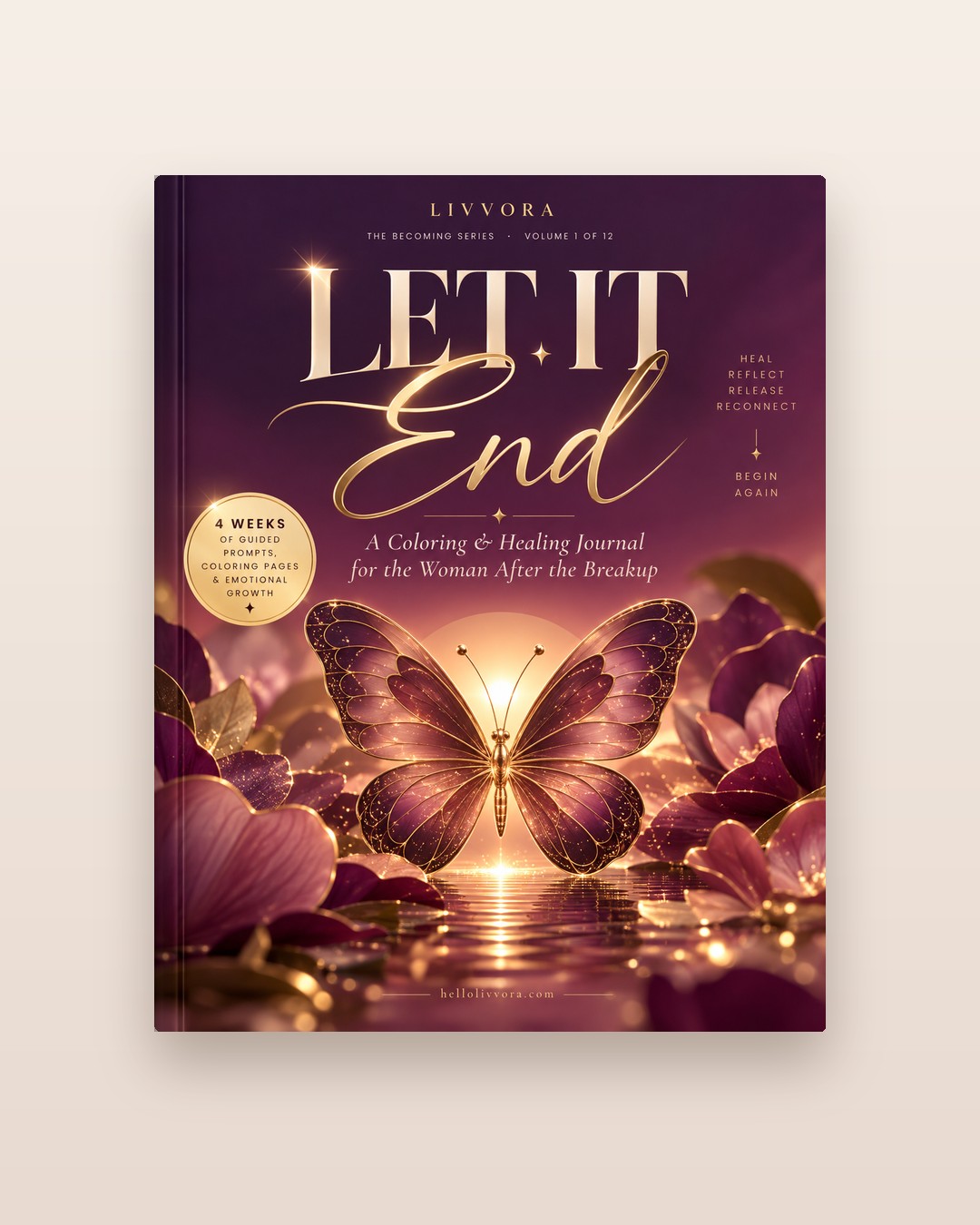
    If you’d like a soft place to put everything you’re feeling, Let It End is our printable coloring and healing journal, made for slow evenings, quiet reflection, and letting go one page at a time.

  • When to Break Up With Someone: 12 Honest Signs

    When to Break Up With Someone: 12 Honest Signs

    It’s late, the house is quiet, and you’re scrolling back through old messages trying to find the moment things changed. Nothing is terribly wrong, and yet something hasn’t felt right for a long time. If you’ve been quietly wondering when to break up with someone, you’re not dramatic and you’re not ungrateful. You’re paying attention, and that is a brave thing to do.

    There is no perfect formula for ending a relationship, and no one outside of it can make the decision for you. But there are patterns worth noticing. Below are twelve honest signs, a few questions to sit with, and a small practice you can try tonight.

    Why this decision feels so heavy

    Ending something you once chose with your whole heart is rarely simple. There is history, shared routines, maybe shared friends or a shared home. There is the fear of being wrong, of hurting someone you care about, of starting over. It’s possible to love a person and still feel that the relationship is no longer good for you. Both things can be true at once, and holding them together is often what makes the question so exhausting.

    So be gentle with yourself as you read. These signs are not a verdict. They are invitations to look more closely at what you already feel.

    When to break up with someone: 12 honest signs

    1. You feel more alone together than apart. Loneliness inside a relationship has a particular ache. If you consistently feel unseen when you’re side by side, that matters.
    2. You’ve stopped sharing the small things. The funny thing at work, the song you heard, the worry on your mind. When you no longer want to tell them, it often means you no longer feel safe or interested in being known by them.
    3. The same argument keeps coming back. Every couple disagrees. But when one conversation loops for months with nothing changing, you may be asking for something they can’t or won’t give.
    4. You’re shrinking to keep the peace. You soften your opinions, skip the plans you love, or apologize for needing things. A good relationship makes room for more of you, not less.
    5. Your values or futures no longer line up. Kids, where to live, faith, money, how you want to spend your days. Some differences are beautiful; others mean you’re walking toward different lives.
    6. Trust feels broken and isn’t being repaired. Trust can be rebuilt, but only when both people do the slow work. If you’re the only one trying, that tells you something.
    7. You feel relief when they’re away. A quiet weekend alone shouldn’t feel like a vacation from your own relationship. Notice what your body does when they leave, and when they come home.
    8. You’re staying for who they used to be. Holding on to the person from the early months, or the person you hope they’ll become, can keep you from seeing who is actually in front of you.
    9. Your needs are treated as too much. Wanting affection, honesty, effort or time is not needy. If asking for basic care leads to eye-rolls or guilt, that is worth naming.
    10. You’ve imagined your life without them, and it felt lighter. A passing daydream is normal. A recurring sense of peace when you picture leaving is a quieter, steadier signal.
    11. The people who love you are worried. Friends don’t get the final word, but if several people you trust have gently voiced concern, it can help to listen with an open heart.
    12. You don’t feel safe. If you feel afraid of your partner, controlled, or put down in ways that leave you small, please reach out to someone you trust or a local support line. Your safety comes first, always.

    Signs it may be a rough season, not the end

    Not every hard chapter means a relationship is over. Stress, grief, a new job or a move can make two good people feel far apart for a while. It may be a season rather than an ending if:

    • You both still want to try, and you can see real effort from each other.
    • Conflict is uncomfortable but respectful, and it actually leads somewhere.
    • You still feel like a team when life gets hard.
    • There’s a clear outside reason for the distance, and it’s being talked about openly.

    If that sounds familiar, the next step may be an honest conversation rather than a goodbye. Either way, clarity starts with knowing what you truly feel.

    Questions to ask yourself before you decide

    When your thoughts are tangled, writing them down can untie a few knots. Take these one at a time, and let your answers be messy:

    • If nothing about this relationship changed for the next five years, how would I feel?
    • Am I staying because I want to, or because I’m afraid of what leaving would mean?
    • What have I already asked for, clearly, and what happened when I did?
    • Who am I when I’m with this person? Do I like her?
    • What would I tell my closest friend if she described my relationship to me?

    If you’d like a gentle structure for this, our Should I Break Up? 7-day relationship clarity journal walks you through these questions and more, one quiet page a day, so you can hear your own voice above the noise.

    Try this tonight

    Before bed, take a sheet of paper and draw a line down the middle. On the left, write “What I’m afraid of losing.” On the right, write “What I’m afraid of keeping.” Fill both sides without judging what comes out. Then circle the one line that made your chest tighten the most. You don’t need to act on it. Just let yourself see it.

    Tomorrow, read it again in daylight. Notice whether it still feels true. Sometimes the answer we’ve been avoiding is already written in our own handwriting.

    If you decide it’s time

    Choosing to leave doesn’t mean the love wasn’t real or that you failed. It means you’re choosing honesty, for both of you. Lean on the people who care about you, give yourself permission to grieve, and remember that healing is not a straight line. If the weight feels like too much to carry alone, talking with a licensed counselor can offer steady support.

    And when you’re ready to begin again, these journal prompts for healing after a breakup are a soft place to start.

    A gentle closing

    Knowing when to break up with someone is less about finding the right sign and more about finally trusting what you’ve been feeling for a while. You are allowed to want a love that feels safe, kind and mutual. You are allowed to take your time. And you are allowed to choose yourself.

    If you’re standing at this crossroads, let the next seven days hold you. Our Should I Break Up? journal is a printable, private space to sort through your feelings, name your needs and reach a decision you can feel at peace with, whatever it turns out to be.

  • 40 Self-Love Journal Prompts for Women

    40 Self-Love Journal Prompts for Women

    It’s late. The house is finally quiet, and you catch yourself replaying a conversation from this afternoon: the thing you said, the way you said it, how you must have sounded. With everyone else, you’re patient and generous without even trying. With yourself, the voice turns sharp. If that feels familiar, these self love journal prompts are for you.

    Self-love rarely arrives as a grand moment. It grows in small, honest pages, written on ordinary nights, when you choose to listen to yourself the way you’d listen to a friend. Below you’ll find 40 gentle prompts to help you do exactly that.

    Why Self Love Journal Prompts Help

    A blank page can feel like a wall. You open your notebook wanting to feel better and end up writing a to-do list, or nothing at all. A good prompt works like a soft knock on a door you forgot was there. It gives your thoughts a direction, so you can move past the noise and reach what you actually feel.

    Self love journal prompts also slow you down. Writing by hand asks you to stay with a single question for a few minutes, which is often longer than we stay with ourselves all day. That pause is where the kindness begins.

    How to Use These Prompts

    There’s no right way to do this, but a few small habits make it easier to return to:

    • Choose one prompt, not ten. One honest page is worth more than a rushed list of answers.
    • Set a gentle limit. Five to ten minutes is enough. Stop while it still feels good.
    • Write without editing. Spelling, grammar and neat handwriting don’t matter here.
    • Come back to the same prompt later. Your answer in a month may surprise you.

    If you’re new to journaling, our guide on how to start a healing journal walks you through the first few pages.

    40 Self-Love Journal Prompts for Women

    Prompts to Meet Yourself Where You Are

    1. How am I really feeling today, beneath the “I’m fine”?
    2. What has my body been trying to tell me this week?
    3. What is one thing I’ve been carrying that isn’t mine to carry?
    4. When did I last feel fully at ease? Where was I, and who was with me?
    5. What part of my life feels heavy right now, and what part feels light?
    6. What do I need more of this month? What do I need less of?
    7. Which emotion do I usually push away, and what might it want me to know?
    8. What would I tell a friend who was living my life right now?
    9. What small win from this week deserves more credit than I gave it?
    10. If today had a color, what would it be, and why?

    Prompts to Soften Your Inner Critic

    1. What is the harshest thing I’ve said to myself lately? Rewrite it with kindness.
    2. Whose voice does my inner critic sound like?
    3. What mistake am I still punishing myself for, and what did it teach me?
    4. List five things I did well today, no matter how small.
    5. What would change if I believed I was already enough?
    6. Which “should” can I let go of this week?
    7. Write a short apology to yourself for a time you weren’t gentle with you.
    8. What do I admire about the way I handle hard things?
    9. When I compare myself to others, what am I really longing for?
    10. What does “good enough” look like for me today?

    Prompts to Honor Your Needs and Boundaries

    1. Where in my life am I saying yes when I mean no?
    2. What does rest truly look like for me, not just stopping, but restoring?
    3. Which relationships leave me feeling full, and which leave me drained?
    4. What boundary would protect my peace this month?
    5. How can I ask for help in a way that feels safe to me?
    6. What is one need I’ve been ignoring because it felt “too much”?
    7. When do I feel most like myself, and how can I make more room for that?
    8. What would my ideal slow morning look like, from the first minute?
    9. What am I allowed to stop apologizing for?
    10. Describe a space, real or imagined, where I feel completely safe.

    Prompts to Dream and Come Home to Yourself

    1. What did I love doing as a little girl that I could bring back, even for ten minutes?
    2. Write a love letter to the woman you’re becoming.
    3. What three words do I want to describe the next season of my life?
    4. What would I try if I weren’t afraid of looking silly?
    5. Which parts of me am I proud of that nobody sees?
    6. How do I want to feel when I wake up a year from now?
    7. What does “coming home to myself” mean to me?
    8. What is one promise I can make to myself and actually keep this week?
    9. Write down ten things that make you feel beautiful that have nothing to do with how you look.
    10. Finish this sentence as many times as you like: “I am learning to love myself by…”

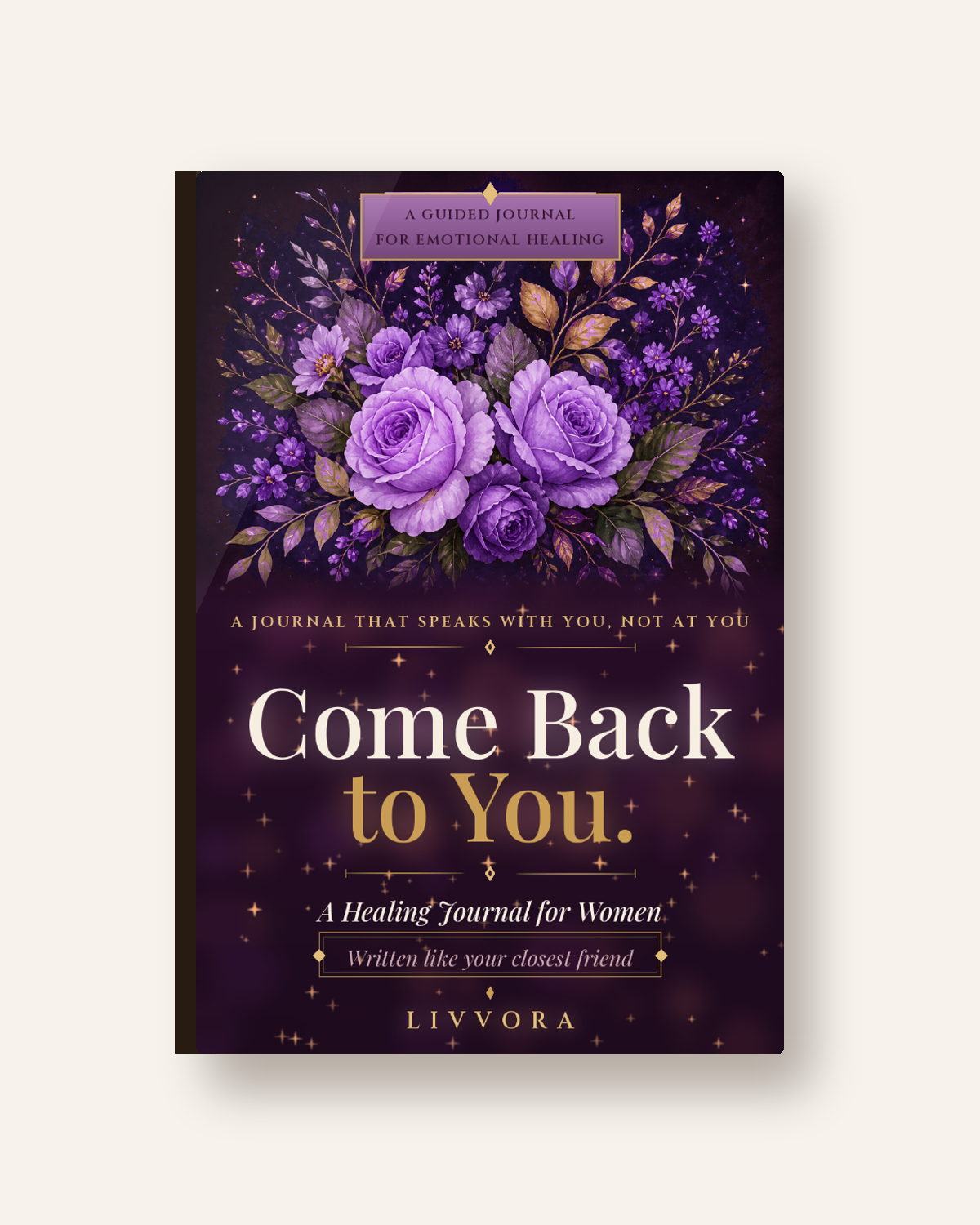
    If you’d like these kinds of questions waiting for you on beautifully designed pages, Come Back to You is a printable healing journal made for exactly this: slow evenings, honest answers and a little more tenderness toward yourself.

    Try This Tonight

    Before bed, make a cup of tea or something warm, dim the lights and choose just one prompt from the list above. Set a timer for seven minutes and write without stopping. When the timer ends, read your page back once and underline the sentence that feels most true. Then close the notebook and say it out loud, softly. That’s it. That’s the practice.

    If you’d like a little more, add one line at the bottom of the page: “Tomorrow, I will be gentle with myself by…” and fill it in with something small and doable.

    A Gentle Reminder

    Loving yourself isn’t a finish line. Some days these prompts will open something beautiful; other days you’ll write two lines and close the notebook, and that counts too. What matters is that you keep showing up for the woman on the page.

    If any of these prompts stir up feelings that feel too heavy to hold alone, it’s okay to reach out to a trusted friend or a licensed professional. Asking for support is its own act of self-love.

    Whenever you’re ready for a guided space to keep going, Come Back to You holds prompts, reflections and quiet pages to help you return to yourself, one evening at a time. You can also browse every LIVVORA journal in our shop.

  • Anxiety Journal Prompts for Women — 30 Guided Prompts to Calm Anxious Thoughts

    If your chest feels tight just reading this, you’re exactly who this guide is for. An anxiety journal is not about fixing yourself overnight — it’s a daily place to put the worry down, look at it honestly, and take your steering wheel back. This is everything we’ve learned building our 30-day anxiety journal for women: what actually helps, how to start tonight, and 30 prompts that make 2 a.m. feel less alone.

    What anxiety actually is (a smoke detector, not a verdict)

    Deep in your brain sits the amygdala — a smoke detector that never went to school. It can’t tell the difference between a bear, a text left on read, and a to-do list. When it senses threat, real or remembered, it floods you with adrenaline: racing heart, tight chest, spiraling thoughts. That’s an anxiety response. It’s your body trying to protect you with the tools it has.

    So anxiety is not weakness, and it’s not you. It’s an alarm — sometimes false, sometimes honest. Either way the answer is the same three-step rhythm we use throughout the journal: notice (name what you’re feeling and where), soften (ground the body first), respond (look at the worry on paper and choose the smallest honest next step).

    One honest note: a journal is a powerful practice, but it is not therapy. If your anxiety feels unbearable, please tell a professional too. Both things can be true: you deserve support, and you can learn to steady yourself.

    Tools to try before you write

    • The 5-4-3-2-1 walk: name 5 things you can see, 4 you can feel, 3 you can hear, 2 you can smell, 1 you can taste.
    • Box breathing: in for 4, hold 4, out 4, hold 4. Longer exhales calm the vagus nerve even faster: in 4, out 8.
    • The control circle: inside, only what you control today. Outside, everything else. Worrying about the outside circle is renting an apartment in a house you don’t own.
    • The worry window: give worry a 10-minute daily appointment. Outside that window, it waits. Most worries lose interest waiting.

    30 anxiety journal prompts for loud nights

    Write messy. Anxious hands are allowed. Try one tonight:

    1. Name the worry in one sentence. Just naming it starts to shrink it.
    2. Where do you feel anxiety in your body — jaw, chest, stomach? Say hello to it.
    3. What is this worry trying to protect you from? Thank it, then tell it the plan.
    4. Write the catastrophe your mind is rehearsing. Now rate how likely it honestly is.
    5. What would you tell your best friend if she had this exact thought?
    6. One thing in your control today. One thing out of it. Release the second one.
    7. What did worry stop you from doing this week? Was it really dangerous?
    8. Write today’s worry as a dramatic headline. Then write the boring, likelier version.
    9. What’s one boundary that would lower your baseline anxiety this month?
    10. List three physical signs that you’re safe right now (warm hands, slow blink, full lungs).
    11. Whose voice does your inner critic sound like? It might not even be yours.
    12. What did you do today that your anxiety said you couldn’t?
    13. What is “enough” for today? Define it before your anxiety defines it for you.
    14. What are you avoiding — and what’s the first step, made 50% smaller?
    15. Write your anxiety’s favorite line. It’s usually an old greatest hit, not news.
    16. What does “calm” look like in your body? Describe the last time you felt it.
    17. Worry window: after 10 scheduled minutes, what remains worth worrying about?
    18. What does your anxiety make you believe about yourself? Answer with evidence.
    19. Where did you feel peace this week, even for a minute? Revisit it in writing.
    20. Write a goodbye letter to one specific worry you’ve outgrown.
    21. Which nervous habit (scrolling, biting, checking) would you soften this week?
    22. Describe your safe place in full sensory detail. Your body can visit it anytime.
    23. What’s the kindest thing someone said to you during a hard season?
    24. Tomorrow’s forecast, written by your wisest self instead of your anxious self.
    25. What have you never told anyone about your anxiety? This page doesn’t have to be shown.
    26. Panic is a wave: it peaks in about ten minutes, then it breaks. Time yourself next time.
    27. Half of anxiety is replaying. Close the replay tab tonight.
    28. Ask: is this a problem to solve, or a feeling to feel?
    29. One small thing your future self will thank you for. Do that.
    30. Write a short letter to a woman whose chest is tight tonight, the way you wish someone had written to you.

    Why writing beats thinking

    Worry thrives in loops — it replays because it never gets an ending. Writing gives each loop a beginning, middle and verdict. That’s why anxiety shrinks on paper: you can’t spiral and write at the same time; the hand is slower than the panic, and slowness is exactly what calms the nervous system down.

    If you want the full structure — grounding toolkit, 30 daily check-ins with an anxiety meter, weekly pattern pages — The Anxiety Journal for Women is a 39-page instant PDF, $14.99. Steady, not numb.

    And if what you feel is more tiredness than worry, our gratitude journal prompts guide might be the softer place to start.

  • Gratitude Journal Prompts for Women — 30 Days to Soften a Tired Heart

    Somebody told you to “just be grateful” once, and it didn’t help. Of course it didn’t — gratitude as a command is just pressure in nicer clothes. But gratitude as a daily practice, written by your own hand in your own words? That changes something. This guide is everything we’ve learned building our 30-day gratitude journal for women: why it works, how to start tonight, and 30 prompts that make it easy.

    Why a gratitude journal works (the honest version)

    Your brain is wired with a negativity bias: it scans for problems so efficiently that good things slip past unnoticed. Gratitude journaling is deliberate attention training — you teach your mind to register what is already well. In the classic “Three Good Things” studies, people who wrote daily blessings for a few weeks reported better mood, better sleep and more optimism, and the effect outlasted the exercise. Their lives didn’t change. Their attention did.

    And to be clear: this is not toxic positivity. On terrible days your three things can be tiny. The shower was hot. My dog loves me. I’m still here. Grateful does not mean untroubled. It means unblinded.

    How to start a gratitude journal (5 minutes, tonight)

    • Evening is easiest. Write before bed: three things you’re grateful for, however small.
    • Be specific. “My friend Karla texted to check on me before my meeting” beats “friends.”
    • Include yourself sometimes. One entry a week that’s about you: something you did, survived, or carried.
    • Miss a day? Come back the next. A broken streak you resume is stronger than a perfect one you quit.

    If you want structure instead of a blank page, our The Gratitude Journal for Women gives you 30 guided days: morning gratitudes, a focus prompt, one line to remember at night, and soft weekly reflections. It’s an instant PDF — start tonight.

    30 gratitude journal prompts for hard weeks

    These are the kind of prompts inside the journal — gentle, honest, never preachy. Try one tonight:

    1. Something kind someone did for me recently.
    2. A comfort I take for granted (warm water, a bed, morning coffee).
    3. A part of my body that carries me faithfully. Thank it.
    4. A song, show or book that held me this week.
    5. A hard season I survived that I’m quietly proud of.
    6. A woman in my life who feels like home. Tell her today.
    7. The smell or taste that instantly calms me.
    8. Something my eyes saw this morning before I touched my phone.
    9. A mistake that taught me something my pride couldn’t.
    10. A quiet luxury in my day I’d miss if it were gone.
    11. Something I prayed for last year that’s now ordinary.
    12. A memory that makes me smile with no warning.
    13. One thing about this season of life I’ll miss someday.
    14. A limit I set recently that protected my peace.
    15. The way my home shelters me — name three details.
    16. Something difficult I did this week that nobody clapped for.
    17. A part of today I want to remember when I’m old.
    18. Something in nature I stopped to actually look at.
    19. A friend who kept showing up. Say her name.
    20. One way I was braver than I realized this year.
    21. A small pleasure I usually rush: the first sip, clean sheets, a good pen.
    22. Something I love about the woman in the mirror, beyond her looks.
    23. An unanswered prayer that later made sense.
    24. A ritual or rhythm that steadies my week.
    25. Someone I’ve never formally thanked — what would I write?
    26. Something kind a stranger did for someone else while I watched.
    27. A meal I enjoyed slowly this week.
    28. Something my hands can do that I forget to appreciate.
    29. A forgiveness I’ve received that I didn’t deserve yet.
    30. The version of me, one year ago, who would be grateful for today.

    Gratitude journaling and faith

    If your practice is anchored in faith, thankfulness has an even deeper root — “in everything give thanks” was never about pretending; it’s about refusing to let a hard season have the last word. Our verse of the day page pairs beautifully with a nightly gratitude entry: one line of thanks for the day, one verse to carry to bed.

    Ready to make it a habit?

    Habits don’t need motivation; they need a threshold low enough to survive bad days. Three things, one line, ten minutes. The Gratitude Journal for Women — 38 beautiful pages, instant PDF download, $14.99. Your first thankful line is waiting on page one.

    And if what you’re carrying tonight is heavier than ingratitude — if it’s worry that won’t switch off — read our guide to anxiety journal prompts next.

  • What to Write When You Don’t Know What to Say: 25 Gentle Journal Prompts for Hard Days

    What to Write When You Don’t Know What to Say: 25 Gentle Journal Prompts for Hard Days

    Hard days are usually the days you least feel like journaling — and the days it helps the most. But when you finally sit down, the page is blank and your mind is loud. So you close the notebook and think: I’ll do it tomorrow.

    Here’s the truth nobody tells you: you don’t need to know what to say. You just need one honest sentence to start. That’s what these prompts are — doors you can walk through when the blank page feels like a wall.

    First, the only three rules

    1. No rules about quantity. One line counts. A messy paragraph counts. Ugly handwriting counts.

    2. No editing yourself. Nobody is grading this. Swearing is allowed. Contradictions are allowed.

    3. Five minutes is enough. Set a timer. When it rings, stop — even mid-sentence. Ending with an appetite makes tomorrow easier.

    Quote card LIVVORA

    25 prompts, grouped by what today feels like

    When everything feels like too much (1–5)
    1. What is actually the heaviest thing right now — and what is just noise around it?
    2. If today were a weather report, what’s the forecast inside me?
    3. What can I take off my plate this week without the world ending?
    4. Who could I ask for help, and what would I actually say?
    5. What would “enough” look like today?

    When you’re angry (6–10)
    6. Write the unsent text. The whole thing.
    7. What boundary got crossed — and whose job was it to protect it?
    8. What is the anger protecting underneath itself?
    9. What do I need to say out loud, even if no one hears it?
    10. How would I want to feel about this in a year?

    When you miss someone (11–15)
    11. What do I miss most — the person, or a version of us?
    12. What did that season of my life give me that I still carry?
    13. If they could see me now, what would I want them to know?
    14. What did I never get to say? Say it here.
    15. What is still possible for me, even with this absence?

    When you feel behind (16–20)
    16. Behind whom, exactly? Whose timeline am I measuring against?
    17. What have I survived that isn’t visible on any résumé?
    18. What would I tell a friend who feels this way?
    19. What’s one thing from five years ago that I’ve completely healed?
    20. What does “my own pace” mean, in concrete terms?

    When you can’t sleep (21–25)
    21. What thought keeps circling? Write it down — it can’t circle while it’s on paper.
    22. What am I afraid might happen tomorrow? And what would I do if it did?
    23. What is one true, small, good thing about today?
    24. What does my body need right now — water, darkness, a hug, silence?
    25. What can I hand over until morning?

    Keep this list close. On the hard days, you don’t need a method — you need a door.

    If you want prompts with room to breathe — a journal that holds your hand instead of judging your answers — this one is ours:

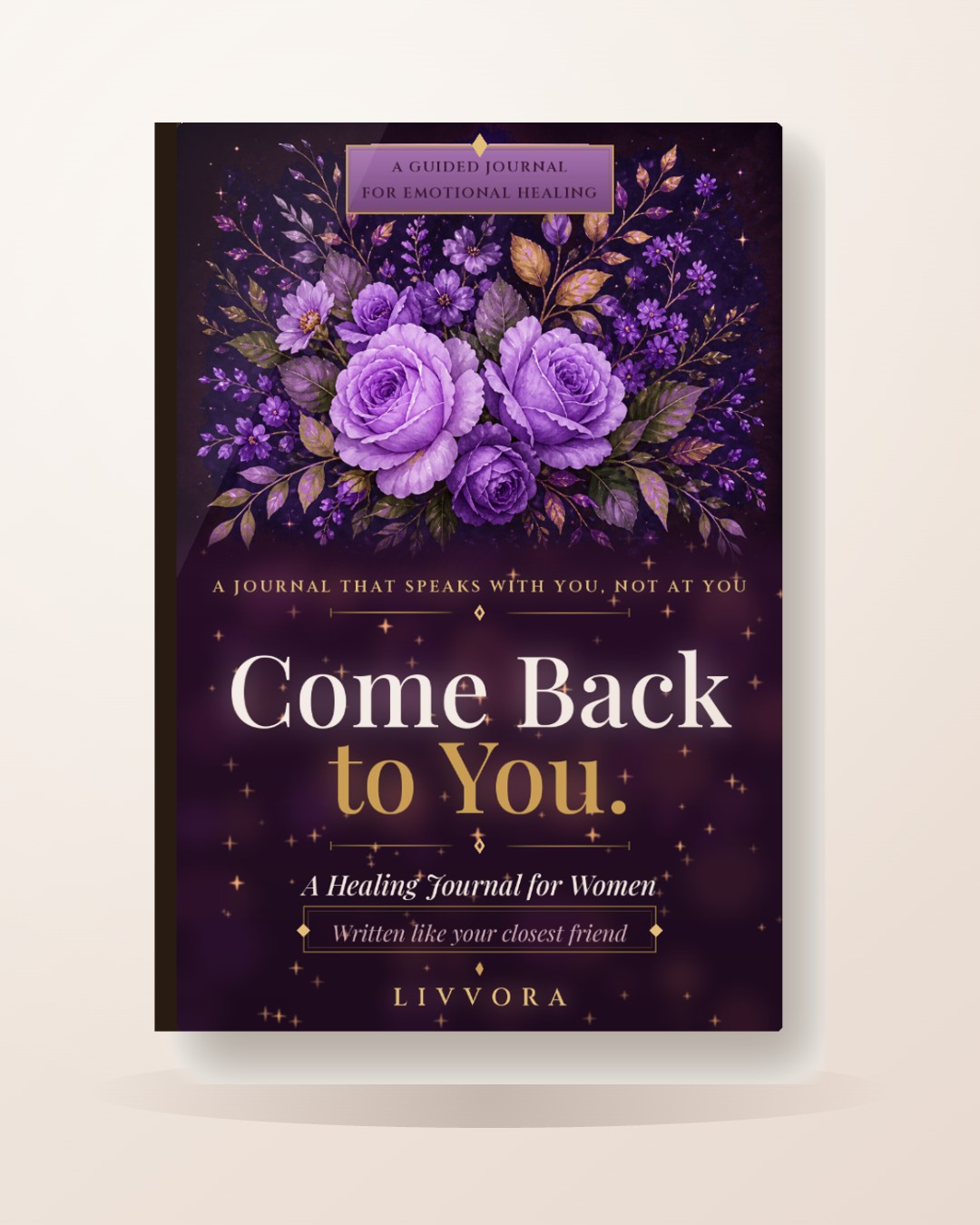
    Come Back to You — A Healing Journal for Women

    THE EBOOK

    Come Back to You

    A guided healing journal in English — deeper prompts, room to write, and a voice that feels like a friend who’s been there. Instant download · $18.99

    Buy now →

    Start free. Download 7 Days to Come Back to You — our free 7-day guided practice — when you subscribe to the newsletter. One gentle page a day. 🤍

  • Cómo empezar un diario de sanación emocional: guía suave para principiantes

    Cómo empezar un diario de sanación emocional: guía suave para principiantes

    Son las 2 de la mañana y la cabeza no se apaga. Sabes que escribir te ayudaría — te lo han dicho tu terapeuta, tu amiga, ese video que viste — pero abres la libreta y no sabes qué poner. La página te mira. La cierras.

    Eso no significa que no sirvas para esto. Significa que nadie te enseñó cómo se empieza. Un diario de sanación emocional no es tarea ni rendimiento — es una conversación suave contigo misma. Aquí va la guía que me hubiera gustado recibir al principio.

    ¿Qué es un diario de sanación emocional?

    Es un espacio privado donde escribes lo que sientes sin corregirlo. No es un diario de productividad ni una lista de pendientes: es escritura terapéutica. Los estudios sobre escritura expresiva llevan décadas mostrando que poner las emociones en palabras reduce el estrés, ayuda a procesar lo difícil y hasta mejora el sueño.

    La diferencia entre una libreta cualquiera y un diario de sanación es la estructura: preguntas guiadas que te abren la puerta en los días en que no sabes qué decir. Por eso un diario guiado es más fácil de sostener que una página en blanco.

    Cómo empezar en 3 pasos suaves

    1. Baja la exigencia. No necesitas escribir todos los días, ni llenar la página, ni tener linda letra. Cinco minutos valen. Una frase vale.

    2. Elige un solo lugar. La libreta vive junto a tu cama o en tu bolso — donde sea, pero siempre ahí, para que encontrarla no sea una excusa.

    3. Empieza por lo pequeño. Antes de las preguntas grandes (“¿qué siento?”), las concretas: ¿qué me pesó hoy?, ¿qué necesito esta noche?, ¿qué le diría a la niña que fui?

    Quote card LIVVORA

    5 prompts para tu primera semana

    Lunes — ¿Qué emoción me visitó hoy y qué quería decirme?
    Martes — ¿Qué me pesó esta semana que todavía no he soltado?
    Miércoles — ¿En qué momento me sentí más yo misma esta semana?
    Jueves — ¿Qué le diría a la niña que fui, con la paciencia que hoy tengo?
    Viernes — ¿Qué necesito dejar de exigirme este fin de semana?

    En los días difíciles

    Cuando duele demasiado, cambia “¿qué siento?” por “¿dónde lo siento en el cuerpo?”. Describir la sensación — el nudo, el calor, el hueco — baja la intensidad sin pedirte que la entiendas. Y si un día no puedes escribir, solo sosten la libreta un momento. Sigue siendo sanación.

    Si quieres una estructura que ya viene pensada para esto — cartas, prompts y espacios calmados, en español — este es nuestro diario guiado:

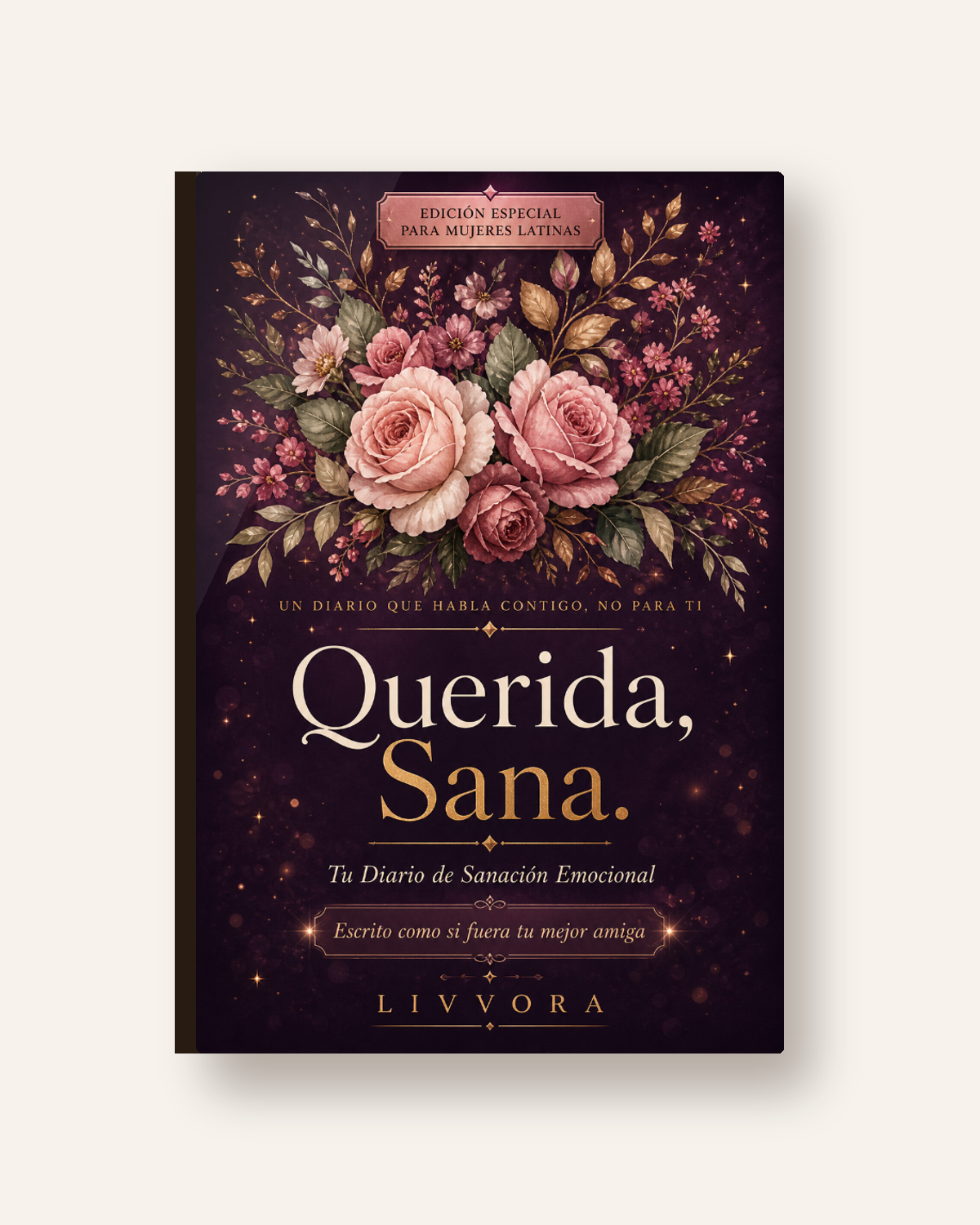
    Querida, Sana. — Diario de Sanación Emocional

    EL EBOOK

    Querida, Sana.

    El diario guiado de sanación emocional en español — 60 páginas de cartas, prompts y espacios para escribir, pensados para mujeres latinas que están aprendiendo a no abandonarse. Descarga instantánea · $18.99

    Comprar ahora →

    Tus primeras páginas son gratis. Suscríbete al newsletter y te enviamos las primeras páginas de Querida, Sana. para que la pruebes antes de comprar — sin compromiso, con mucho cariño. 🤍

  • Frases de autoestima y motivación para sanar y reconectar contigo

    Frases de autoestima y motivación para sanar y reconectar contigo

    Hay días en los que el peso del mundo se siente denso, sis. Te levantas dudando de tus pasos o preguntándote si eres suficiente. En esos momentos, una sola frase bien dicha —una palabra cargada de verdad y ternura— tiene el poder sagrado de sostener tu día, cambiar el rumbo de tus pensamientos y recordarte quién eres realmente.

    La sanación emocional no sucede de la noche a la mañana; es un proceso paulatino donde la forma en que te hablas a ti misma es fundamental. Las palabras que eliges repetirte construyen tu realidad interna. Por eso, cuando buscas autoestima frases motivadoras, no buscas clichés vacíos; buscas anclas de verdad que te devuelvan al centro de tu propio corazón.

    En LIVVORA queremos acompañarte a sanar la relación más importante de tu vida: la que mantienes contigo misma. Para profundizar en este proceso y aprender a cultivar un amor propio inquebrantable, te invitamos a leer nuestra guía sobre cómo aprender a amarte a ti misma, pensada para abrazar tu historia sin juicios.

    A continuación, encontrarás 30 frases de autoestima y motivación creadas como bálsamo para tu sanación. Guárdalas y deja que cada una haga su trabajo en tu corazón.


    30 Frases originales de autoestima y motivación para mujeres en sanación

    Estas frases motivadoras para mujeres han sido escritas desde la empatía y la dulzura, divididas en cinco secciones clave.

    1. Para cuando te comparas con los demás

    Cuando sientas que mides tu valor a través del progreso de otras personas, respira y lee estas frases:

    1. “No tienes que disminuir tu luz para que otros no se encandilen, sis; florecer en tu propio jardín jamás desmerece el paisaje del otro.”
    2. “Tu ritmo no es un retraso; es simplemente la cadencia perfecta con la que la vida está tejiendo tu propia historia.”
    3. “Deja de medir tu proceso real con las vitrinas pulidas que otros eligen mostrar al mundo.”
    4. “Lo que es verdaderamente para ti no te pedirá jamás que te conviertas en otra persona para alcanzarlo.”
    5. “Compararte es regalarle la energía valiosa de tu presente a un estándar que ni siquiera te pertenece.”
    6. “Nadie en este mundo puede hacer de ti una mejor versión de lo que tú puedes ser cuando te habitas con amor y paciencia.”

    2. Para cuando te sientes indigna o dudas de tu valor

    Cuando la duda te haga creer que debes merecer el amor a fuerza de sacrificios, recuerda que tu valor es inherente. Guarda estas frases de autoestima:

    1. “No tienes que ser menos para que alguien te elija más.”
    2. “Tu valor no se negocia ni cambia según la capacidad limitada que otros tengan de reconocerte.”
    3. “Mereces un amor que se sienta como un refugio cálido y no como una batalla constante por demostrar que vales.”
    4. “No eres demasiado intensa ni difícil de amar; simplemente estabas pidiendo agua en un pozo seco.”
    5. “Tu derecho sagrado a sanar, recibir ternura y ser respetada existe sencillamente porque estás viva, sis.”
    6. “Antes de salir a buscar la aprobación afuera, recuerda que tú ya eres el hogar seguro que estabas esperando.”

    3. Para cuando necesitas empezar de nuevo

    Recomenzar es un acto supremo de valentía. Si estás cerrando un ciclo o iniciando un nuevo capítulo, estas palabras son para ti:

    1. “Recomenzar no significa haber fracasado; significa que tuviste la valentía de no quedarte donde ya no florecías.”
    2. “Cada amanecer es un permiso sagrado para soltar la versión de ti que se sostuvo únicamente por supervivencia.”
    3. “No le debes explicaciones a tu pasado sobre las decisiones valientes que hoy salvan tu paz interior.”
    4. “Los pedazos de lo que se rompió no definen tu futuro; son las piezas con las que construyes tu nuevo camino.”
    5. “Sanar no es un camino recto, es el abrazo constante que te das cada vez que decides volver a intentarlo.”
    6. “Permítete empezar de cero las veces que sean necesarias; la vida se renueva contigo en cada paso.”

    4. Para reconciliarte con tu cuerpo

    Tu cuerpo ha sido la vivienda fiel de tus emociones y batallas. Reconciliarte con tu templo físico es clave para amarte por entero:

    1. “Tu cuerpo es el templo sagrado que te ha sostenido en cada tormenta, no un proyecto constante por corregir.”
    2. “Honra la piel que ha guardado tus historias, tus risas y cada batalla silenciosa que ya superaste, sis.”
    3. “No necesitas la validación de un espejo ajeno para saber que habitas una belleza profunda y viva.”
    4. “Suelta la exigencia desgastante de amoldarte a moldes ajenos; tu cuerpo es perfecto en su propia verdad.”
    5. “Trata a tu cuerpo con la misma suavidad, respeto y paciencia con la que cuidarías a quien más amas.”
    6. “Tu valor nunca ha dependido de una talla ni de un reflejo fugaz, sino del alma maravillosa que te habita.”

    5. Para reavivar la fe y la confianza en ti misma

    La confianza nace de recordar que sabrás cómo sostenerte. Cuando la duda borre tu norte, estas frases motivadoras para mujeres te devolverán la fe:

    1. “Confía en que los desiertos que atraviesas hoy son la tierra fértil donde crecerán tus mejores milagros.”
    2. “Cuando la duda intente apagar tu voz, recuerda todas las veces que creíste no poder y aun así sanaste.”
    3. “La fe en ti misma no significa no tener miedo, sino caminar sosteniendo tu propia mano a pesar de él.”
    4. “Hay una fuerza infinita latiendo dentro de ti, sis; respira profundo y recuerda de qué estás hecha.”
    5. “El universo no te pide que lo resuelvas todo hoy, solo que des el paso presente con el corazón tranquilo.”
    6. “Tu historia apenas está comenzando, y lo mejor de ti no se quedó atrás: florece justo ahora.”

    Cómo usar estas frases de autoestima en tu diario de sanación

    Tener a mano autoestima frases motivadoras es un paso hermoso, pero el verdadero cambio ocurre cuando permites que estas palabras integren su mensaje en tu vida. La escritura terapéutica en tu diario te ayuda a asimilarlas.

    Te proponemos esta práctica sencilla en 3 pasos:

    1. Elige la frase que resuene hoy: Revisa la lista y selecciona la afirmación que te provoque una emoción especial o incluso cierta incomodidad reflexiva.
    2. Escríbela a mano en tu journal: Transcribe la frase elegida en tu cuaderno. Escribir a mano conecta tus emociones con tu mente consciente.
    3. Pregúntate el porqué y explora sin juzgarte: Tómate unos minutos para escribir la frase en tu journal y preguntarte por qué te tocó en este momento:
    4. ¿Por qué me tocó o resonó esta frase hoy?
    5. ¿Qué pensamiento o exigencia necesito soltar para creer en este mensaje?
    6. ¿Qué pequeño acto de compasión hacia mí misma puedo realizar hoy inspirada en esta afirmación?

    Escribir la frase que te tocó y preguntarte el porqué transforma la lectura en un diálogo íntimo contigo misma. Tu diario es un espacio seguro para expresarte libremente.


    Da el siguiente paso en tu viaje de amor propio

    Sanar no es un camino para recorrer a solas. En LIVVORA hemos creado espacios de apoyo pensados para acompañarte con dulzura a cada paso.


    Querida, Sana. Premium Bundle

    Pasa de las afirmaciones a la transformación real

    Las frases te dan inspiración; un diario guiado te da estabilidad. Lleva tus reflexiones al siguiente nivel con el ‘Querida, Sana.’ Premium Bundle ($29) (128 páginas en PDF de acceso inmediato).

    Consigue el Bundle Premium ($29) →

    Recuerda siempre, sis: mereces ser tratada con la misma bondad que entregas a quienes amas. Tu sanación es tu mayor regalo. 🌸

  • Cómo identificar mis sentimientos: guía para entender lo que sientes y sanar

    Hay días en los que despiertas con un peso invisible en el pecho. No ha pasado nada grave ni hay un problema evidente, pero sientes un nudo sordo en el estómago o una tensión apretada en la garganta. Te preguntas qué te pasa y la respuesta rápida que le das a los demás —y a ti misma— es un cansino «no sé, me siento rara» o «solo estoy cansada».

    La realidad, sis, es que no estás simplemente cansada. Lo que ocurre es que estás experimentando una acumulación de sentimientos a los que nunca les has puesto nombre. Vivimos corriendo, resolviendo pendientes y cuidando a otros, mientras archivamos nuestro mundo interior. Pero lo que no se nombra no desaparece; se acumula en el cuerpo y se transforma en ansiedad, apatía o irritabilidad.

    Aprender cómo identificar mis sentimientos no es un ejercicio cursi: es la base indispensable de la sanación emocional. Cuando le das un nombre preciso a lo que habita en tu pecho, le quitas el poder de abrumarte en la sombra y comienzas a recuperar tu paz mental.


    Por qué nos enseñaron a no nombrar lo que sentimos

    Para entender por qué resulta tan difícil responder a la pregunta «¿cómo me siento hoy?», hay que mirar atrás. A muchas de nosotras nos criaron en entornos donde ciertas expresiones emocionales no eran bien recibidas.

    Desde pequeñas escuchamos frases como «no llores, no es para tanto», «sé fuerte», «no te enojes» o «tienes que ser comprensiva». Aprendimos rápido la lección: mostrar incomodidad molestaba a los demás, exigir límites nos hacía parecer egoístas y expresar tristeza nos volvía vulnerables.

    Como respuesta de supervivencia, las mujeres aprendemos a enfocar nuestro radar en las necesidades ajenas, apagando el propio. Aprendemos a reprimir el enojo para evitar conflictos y a enmascarar la tristeza detrás de una sonrisa funcional.

    Sin embargo, la mente puede intentar engañarse, pero la biología no miente. Reprimir lo que sientes mantiene tu sistema nervioso en alerta constante. La falta de vocabulario emocional no es un fallo personal, sis; es el resultado de un condicionamiento social que nos enseñó a complacer antes que a sentir.


    La diferencia entre emoción y sentimiento explicada simple

    Suele usarse ambos términos como sinónimos, pero entender la distinción entre emoción y sentimiento es un paso gigante para aliviar la carga mental.

    • La emoción es visceral y corporal. Es una respuesta biológica e inmediata ante un estímulo. Ocurre de forma automática: la descarga de adrenalina ante un susto o el calor en el rostro ante una injusticia. Las emociones son intensas, duran poco tiempo y se sienten en el cuerpo.
    • El sentimiento es la construcción mental consciente. Es el significado que le asignas a esa emoción junto con tus pensamientos y recuerdos. Mientras la emoción es la ola inicial que te sacude, el sentimiento es la marea que permanece cuando procesas esa ola.

    Por ejemplo, la emoción básica ante una crítica puede ser rabia o miedo. Si alimentas esa respuesta con pensamientos como «nunca hago nada bien», esa emoción se transforma en un sentimiento duradero de inseguridad, resentimiento o desvalorización.

    Entender esto te da poder: la emoción no la puedes evitar porque es un reflejo, pero el sentimiento sí puedes observarlo, cuestionarlo y sanarlo una vez que aprendes a identificarlo.


    Cómo nombrar lo que sientes: el método de las 3 preguntas

    Cuando sientas esa neblina interna en la que solo sabes que «algo anda mal», no intentes resolver todo de golpe. Respira profundo y aplica este método sencillo de tres preguntas:

    1. ¿Qué siento en el cuerpo?

    Las emociones dejan huella física. Cierra los ojos y escanea tu cuerpo sin juzgar:
    * ¿Tienes opresión en el pecho o falta de aire?
    * ¿Hay un nudo en la garganta o la mandíbula apretada?
    * ¿Sientes pesadez en los hombros o malestar en el estómago?

    Identificar la ubicación física te saca del bucle mental y te conecta con el presente.

    2. ¿Cuándo empezó y qué ocurrió justo antes?

    Rastrea el origen. A veces la molestia explota por la tarde, pero el detonante ocurrió por la mañana: un comentario cortante, un mensaje sin responder o haber dicho «sí» cuando pedías descansar. Identificar el hecho despeja la confusión.

    3. ¿A qué le tengo miedo en este momento?

    Detrás de sentimientos incómodos como la rabia o la apatía, casi siempre hay un miedo oculto. Pregúntate sin filtros: ¿tengo miedo al rechazo, a la soledad, al fracaso o a no ser suficiente? Al descubrir el miedo raíz, el sentimiento revela su verdadero mensaje.


    Vocabulario emocional básico: 22 sentimientos y sus matices

    No es lo mismo sentirte sola que sentirte abandonada, ni sentirse enojada que defraudada. Usar la palabra exacta libera tensión porque demuestra a tu cerebro que comprendes lo que vives.

    Aquí tienes 22 sentimientos frecuentes con sus matices:

    1. Sola: Sensación de falta de compañía o conexión puntual.
    2. Abandonada: Sentimiento profundo de que alguien importante te retiró su apoyo.
    3. Incomprendida: Sentir que expresas tu verdad pero los demás no captan tu dolor.
    4. Melancólica: Tristeza suave acompañada de nostalgia por el pasado.
    5. Agotada emocionalmente: Falta de energía mental para procesar vivencias.
    6. Desconsolada: Tristeza aguda donde sientes que nada alivia la pérdida.
    7. Insegura: Duda constante sobre tus capacidades, tu valor o tu lugar.
    8. Expuesta: Sentirte vulnerable, como si tus fallas estuvieran a la vista.
    9. Abrumada: Sentir que la cantidad de tareas o emociones supera tu capacidad.
    10. Impotente: Frustración de ver una situación injusta y no poder cambiarla.
    11. Ansiosa: Inquietud persistente enfocada en un futuro incierto.
    12. Resentida: Guardar un dolor antiguo que se ha agriado con el tiempo.
    13. Herida: Punzada directa provocada por una traición o palabra hiriente.
    14. Defraudada: Vacío cuando una expectativa alta sobre alguien no se cumple.
    15. Frustrada: Rabia cuando un obstáculo se interpone entre tú y tu meta.
    16. Juzgada: Tensión al percibir que otros evalúan o critican tus actos.
    17. Apatía: Falta de interés por cosas que antes te gustaban.
    18. Culpable: Sensación de haber actuado en contra de tus valores.
    19. Avergonzada: Deseo de desaparecer tras percibir una falla propia ante otros.
    20. Saturada: Cuando la exigencia externa o interna sobrepasa tu límite.
    21. Invisibilizada: Percepción de que tu presencia o voz no son tomadas en cuenta.
    22. Desorientada: Sentir que has perdido el rumbo claro en una etapa de cambio.

    Journaling como descarga: cómo escribir lo que sientes sin filtrar

    Saber nombrar lo que sientes es el primer paso; sacarlo de tu cabeza es el segundo. Aquí es donde el journaling se convierte en tu herramienta más valiosa.

    Olvídate de diarios perfectos, sis. El journaling de descarga no es para mostrarlo a nadie; es un espacio de liberación bruta.

    La técnica de descarga mental libre

    1. Escribe 10 minutos sin parar: Toma cuaderno y papel. Escribe exactamente lo que pasa por tu mente, aunque sean frases sueltas.
    2. Desactiva la censura: Si sientes rabia, escríbela. Si hay celos o vergüenza, vuelcalos al papel. El papel lo aguanta todo. Sacar tu sombra evita que actúe en tu vida diaria.
    3. Sin correcciones: No te preocupes por la gramática. Permítete garabatear o tachar.
    4. Cierra con una respiración: Al terminar, inhala profundo y reconoce que diste el primer paso para procesar lo que sientes.

    10 Prompts de journaling para explorar tus sentimientos

    Usa estas preguntas para guiar tu sesión de introspección:

    1. ¿Qué emoción he intentado evitar esta semana y por qué me da miedo sentirla?
    2. Si la opresión en mi cuerpo pudiera hablar, ¿qué me diría hoy?
    3. ¿En qué momentos de la semana me sentí más desconectada de mí misma?
    4. ¿Qué necesidad no atendida está detrás del malestar que siento ahora?
    5. ¿A quién necesito ponerle un límite claro para proteger mi paz?
    6. ¿Qué historia me estoy contando sobre esta situación que aumenta mi frustración?
    7. ¿Cuándo fue la última vez que me permití llorar sin sentir culpa?
    8. ¿Qué sentimiento estoy cargando por intentar cumplir expectativas ajenas?
    9. ¿Cómo puedo tratarme con más amabilidad en este preciso instante?
    10. ¿Qué pequeño paso puedo dar hoy para brindarme el apoyo que busco fuera?

    Tu espacio seguro para sanar

    Identificar tus sentimientos requiere práctica y compasión. Es un camino de valentía, pero no tienes que recorrerlo sola.


    Querida, Sana. Premium Bundle

    Tu espacio seguro para procesar y sanar lo que sientes

    Transforma la confusión emocional en paz interior. Descubre el ‘Querida, Sana.’ Premium Bundle ($29) con 128 páginas de ejercicios prácticos, preguntas de autorreflexión y guía suave para volver a ti.

    Consigue el Bundle Premium ($29) →

    Recuerda, sis: tus sentimientos no son tus enemigos. Son brújulas internas que te señalan dónde sanar para volver a ti. 🌸

  • Autoestima: cómo reconstruirla desde cero y dejar de dudar de ti

    Autoestima: cómo reconstruirla desde cero y dejar de dudar de ti

    ¿Alguna vez has entrado a una habitación y has sentido que todos ocupan su lugar de forma natural, mientras tú buscas disculparte en silencio por el simple hecho de estar allí?

    Es esa voz tenue pero constante en el fondo de tu mente que te susurra: “No eres suficiente. No hables muy fuerte. No pidas demasiado. Confórmate con lo que hay”.

    Si has vivido con esa sensación en el pecho, quiero detenerte un segundo y decirte algo con total honestidad: no hay nada defectuoso en ti. Lo que ocurre es que tu autoestima ha sido desgastada por años de exigencias externas, críticas silenciosas y expectativas que nunca te pertenecieron.

    Reconstruir la autoestima no se logra comprando la idea de que debes levantarte cada mañana sonriendo frente al espejo diciéndote que eres perfecta. Eso no es sanación; es positivismo tóxico. La verdadera sanación de la autoestima es un proceso íntimo, paciente y realista.

    En este artículo vamos a hablar de frente, sis. Exploraremos qué es la autoestima realmente, por qué se quiebra en la infancia o en nuestras relaciones adultas, la diferencia clave entre autoestima y autoconcepto, y qué acciones cotidianas te permitirán volver a habitar tu vida con seguridad, paz y auténtico amor propio.


    1. ¿Qué es la autoestima de verdad? (Y lo que nos enseñaron mal)

    Durante mucho tiempo nos vendieron la idea de que tener una buena autoestima consiste en proyectar una imagen inquebrantable, no sentir dudas jamás o caminar con una seguridad que roza la arrogancia. Nos dijeron que subir la autoestima era cuestión de vestirse bien, repetir afirmaciones o acumular logros profesionales.

    Pero seamos sinceras: puedes tener un trabajo increíble, lucir impecable y recibir halagos a diario, y aun así irte a la cama sintiendo un vacío enorme.

    Entonces, ¿qué es la autoestima?

    La autoestima es la valoración profunda, emocional y silenciosa que haces de tu propio ser. No se trata de lo que haces ni de lo que posees, sino de cómo te tratas a ti misma cuando nadie te mira, cuando cometes un error o cuando atraviesas un momento difícil. Es la convicción interna de que tu valor como persona es intrínseco e innegociable, independientemente de tus circunstancias o de la aprobación ajena.

    Es fundamental distinguir entre autoestima saludable y otras posturas que solemos confundir:

    • No es arrogancia: La arrogancia necesita superar a otros para sentirse valiosa. La verdadera autoestima no compite con nadie; reconoce su propio valor y el de los demás sin necesidad de compararse.
    • No es perfeccionismo: La búsqueda compulsiva de perfección es un mecanismo de defensa contra la vergüenza. La autoestima te da el permiso de ser imperfecta y humana.
    • No es positivismo tóxico: No se trata de negar el dolor, la tristeza o el enfado. Tener autoestima significa validar tus emociones sin permitir que definan tu valor fundamental.

    Cuando entiendes qué es la autoestima de forma honesta, te das cuenta de que saber cómo subir la autoestima no depende de cambiar quién eres para gustar al resto, sino de aprender a regresar a ti misma.


    2. Por qué se rompe la autoestima: rastreando las heridas del pasado

    La autoestima no se destruye de un día para otro en la adultez. En la mayoría de los casos, la pérdida de confianza en una misma es el resultado de un goteo constante de experiencias que fueron moldeando la idea de que tenías que hacer méritos para ser amada.

    Para entender cómo reconstruirla, primero debemos identificar los factores que la fracturaron:

    La crítica en la infancia y el entorno familiar

    Muchas crecimos en hogares donde la exigencia era alta y el afecto condicional. Si de niña recibiste comentarios frecuentes sobre tu cuerpo, tu carácter o tus emociones (“eres muy dramática”, “deberías aprender de tu hermana”), tu cerebro infantil asumió que para estar a salvo debías anularte. Aprendiste a complacer antes que a escucharte.

    La comparación constante y la cultura del rendimiento

    Crecimos en una sociedad que evalúa a las mujeres por su utilidad, su apariencia o su capacidad de sacrificio. Las redes sociales nos entrenan para comparar nuestras vidas reales con las versiones editadas de los demás. Si siempre sientes que te falta algo para llegar a la meta, tu autoestima vive en un estado permanente de déficit.

    Relaciones que enseñaron a pedir perdón por existir

    Las relaciones de pareja, de amistad o laborales dinámicamente tóxicas dejan marcas profundas. Si estuviste al lado de personas manipuladoras o emocionalmente indisponibles, es probable que hayas aprendido a empequeñecerte para evitar conflictos. Con el tiempo, te acostumbraste a justificar el maltrato y a dudar de tu propia percepción de la realidad.

    Reconocer este origen no es para culpar a tu pasado ni para instalarte en el victimismo, sis. Es para darte cuenta de que esa voz crítica que habita en tu cabeza no nació contigo: te la enseñaron. Y todo lo que fue aprendido, puede desaprenderse.


    3. La diferencia fundamental entre autoestima y autoconcepto

    Es muy común confundir estos dos términos en el desarrollo personal, pero comprender su distinción es clave para enfocar bien tu trabajo emocional.

    Concepto Definición Principal Ejemplo Cotidiano
    Autoconcepto La dimensión cognitiva: la imagen mental, creencias y descripciones que tienes sobre ti misma. “Soy una persona estructurada, observadora y reservada.”
    Autoestima La dimensión afectiva: la evaluación emocional y el grado de amor y respeto que te profesas. “Me acepto y me cuido aun cuando cometo errores o no logro lo que planeaba.”

    El autoconcepto responde a la pregunta: ¿Quién soy yo? Incluye tus roles, tus habilidades percibidas, tus rasgos de personalidad y tus etiquetas.

    La autoestima responde a la pregunta: ¿Cómo me siento con respecto a quien soy? Es el afecto y la dignidad que te otorgas.

    Puedes tener un autoconcepto muy claro y, sin embargo, tener una autoestima desgastada si te juzgas duramente por tus limitaciones. Reconstruir tu vida requiere equilibrar ambos aspectos: actualizar la idea de quién eres hoy y nutrir el sentimiento de que mereces amor y respeto simplemente por existir.


    4. 7 formas prácticas de reconstruir tu autoestima día a día

    Sanar la relación contigo misma no requiere grandes gestos dramáticos. La verdadera reconstrucción ocurre en los pequeños detalles invisibles de tu rutina diaria. Aquí tienes siete herramientas reales para comenzar hoy mismo.

    1. Reeduca tu habla interna

    Presta atención a cómo te hablas cuando cometes un error o miras tu reflejo cansado en el espejo. ¿Te tratas con la misma dureza con la que jamás tratarías a tu mejor amiga? El primer paso para saber cómo subir la autoestima es capturar esa voz crítica y ponerle un alto. Basta con pasar de la agresión a la neutralidad compasiva: “Cometí un error, pero soy humana y puedo resolverlo”.

    2. Haz del journaling un hábito de procesamiento

    Escribir a mano en un diario de sanación te permite volcar el ruido mental sobre el papel sin filtro ni censura. El journaling ayuda a distanciarte de tus pensamientos automáticos: cuando ves tus miedos escritos, dejan de controlar tu mente y se convierten en simples enunciados que puedes cuestionar y transformar.

    3. Cúmplele pequeñas promesas a tu persona

    La autoestima se alimenta de la autoconfianza, y la confianza se construye con hechos. Si te prometes beber un vaso de agua al despertar, caminar 15 minutos o apagar el teléfono temprano, cúmplelo. Mantener la palabra que te das a ti misma le envía a tu cerebro un mensaje clarísimo: “Soy una persona digna de confianza y mi bienestar importa”.

    4. Establece límites firmes sin dar explicaciones excesivas

    Decir “no” sin sentir la necesidad urgente de disculparte o inventar una excusa es un acto radical de amor propio. Cada vez que dices sí a los demás a expensas de tu propia paz, te estás diciendo no a ti misma. Poner límites no te convierte en una persona egoísta; te convierte en una persona autorrespetuosa que cuida su energía.

    5. Aplica una dieta digital y detén la comparación

    Tus redes sociales deben ser un espacio de inspiración o tranquilidad, no un tribunal de juzgamiento. Si seguir a ciertas cuentas te deja con una sensación de insuficiencia, utiliza el botón de dejar de seguir o silenciar sin culpa. Proteger el contenido que consumes a diario es cuidar la salud de tu mente.

    6. Cultiva tu fe y tu dimensión espiritual

    Conectar con tu espiritualidad te ayuda a recordar que no estás sola y que tu existencia forma parte de algo mucho más grande e infinitamente valioso. La fe te sostiene en los días donde tus propias fuerzas no alcanzan y te permite soltar el control sobre aquello que no puedes cambiar, depositando tu confianza en el proceso de tu vida.

    7. Busca y nutre una comunidad segura

    No fuimos diseñadas para sanar aisladas. Busca espacios y personas donde no tengas que fingir, donde puedas mostrar tus luces y tus sombras sin temor a ser juzgada. Estar rodeada de mujeres que también están en su camino de crecimiento te recuerda que tus luchas son compartidas y que mereces ser sostenida con ternura.


    5. Cómo el journaling reprograma tu voz interna (+ 10 prompts de autoestima)

    El acto de escribir a mano activa rutas neuronales que te permiten reorganizar tus emociones de forma consciente. Cuando escribes en un journal con intención, dejas de repetir de memoria las historias de invalidez que te contaste durante años y comienzas a redactar una nueva narrativa personal.

    Para apoyarte en este proceso, hemos preparado 10 prompts de autoestima para que respondas en tu libreta favorita. No busques respuestas bonitas ni perfectas; escribe lo primero que salga del corazón:

    1. ¿Qué creencia sobre mi valor personal aprendí en mi infancia que hoy elijo cuestionar y soltar?
    2. ¿En qué momentos de la última semana me sentí orgullosa de mí y me olvidé de reconocerlo?
    3. Si mi voz interna crítica hablara como un personaje externo, ¿qué intenta proteger y cómo puedo responderle desde el amor?
    4. ¿Qué límite necesito poner actualmente para proteger mi tranquilidad mental y mi energía?
    5. ¿Qué 3 fortalezas o cualidades intangibles poseo que no dependen de mi apariencia ni de mis logros externos?
    6. ¿De qué manera me he abandonado recientemente para complacer a alguien más y cómo puedo reparar eso hoy?
    7. ¿Qué significa para mí la compasión hacia mí misma en los días difíciles?
    8. ¿Cuáles son tres promesas sencillas que me comprometo a cumplir conmigo esta semana?
    9. ¿Qué actividades o momentos me hacen sentir verdaderamente libre, presente y conectada conmigo?
    10. Escribe una carta breve dirigida a ti misma dentro de 5 años, expresándole tu gratitud por no haberte rendido hoy.

    6. Tu camino de sanación empieza con un paso sencillo

    Reconstruir la autoestima no consiste en convertirte en alguien diferente, sis. Consiste en recordar quién eras antes de que el mundo te dijera quién tenías que ser. Es un viaje de desaprendizaje, de quitar capas de culpa y de abrazar tu historia con toda su humanidad.


    Querida, Sana. Premium Bundle

    Reconstruye tu autoestima desde la raíz

    El amor propio no es una teoría: es una práctica diaria. Comienza hoy tu transformación con el ‘Querida, Sana.’ Premium Bundle ($29), la experiencia completa que incluye nuestro diario best seller, el Self Love Workbook y She Chose Peace.

    Consigue el Bundle Premium ($29) →

    Recuerda siempre: tu valor no se negocia, no se gana y no se pierde. Ya está dentro de ti. Solo necesitas volver a casa. 🌸