Category: Journaling

How to journal, what to write, and why 10 minutes a day changes everything.

  • Anxiety Journal Prompts for Women — 30 Guided Prompts to Calm Anxious Thoughts

    If your chest feels tight just reading this, you’re exactly who this guide is for. An anxiety journal is not about fixing yourself overnight — it’s a daily place to put the worry down, look at it honestly, and take your steering wheel back. This is everything we’ve learned building our 30-day anxiety journal for women: what actually helps, how to start tonight, and 30 prompts that make 2 a.m. feel less alone.

    What anxiety actually is (a smoke detector, not a verdict)

    Deep in your brain sits the amygdala — a smoke detector that never went to school. It can’t tell the difference between a bear, a text left on read, and a to-do list. When it senses threat, real or remembered, it floods you with adrenaline: racing heart, tight chest, spiraling thoughts. That’s an anxiety response. It’s your body trying to protect you with the tools it has.

    So anxiety is not weakness, and it’s not you. It’s an alarm — sometimes false, sometimes honest. Either way the answer is the same three-step rhythm we use throughout the journal: notice (name what you’re feeling and where), soften (ground the body first), respond (look at the worry on paper and choose the smallest honest next step).

    One honest note: a journal is a powerful practice, but it is not therapy. If your anxiety feels unbearable, please tell a professional too. Both things can be true: you deserve support, and you can learn to steady yourself.

    Tools to try before you write

    • The 5-4-3-2-1 walk: name 5 things you can see, 4 you can feel, 3 you can hear, 2 you can smell, 1 you can taste.
    • Box breathing: in for 4, hold 4, out 4, hold 4. Longer exhales calm the vagus nerve even faster: in 4, out 8.
    • The control circle: inside, only what you control today. Outside, everything else. Worrying about the outside circle is renting an apartment in a house you don’t own.
    • The worry window: give worry a 10-minute daily appointment. Outside that window, it waits. Most worries lose interest waiting.

    30 anxiety journal prompts for loud nights

    Write messy. Anxious hands are allowed. Try one tonight:

    1. Name the worry in one sentence. Just naming it starts to shrink it.
    2. Where do you feel anxiety in your body — jaw, chest, stomach? Say hello to it.
    3. What is this worry trying to protect you from? Thank it, then tell it the plan.
    4. Write the catastrophe your mind is rehearsing. Now rate how likely it honestly is.
    5. What would you tell your best friend if she had this exact thought?
    6. One thing in your control today. One thing out of it. Release the second one.
    7. What did worry stop you from doing this week? Was it really dangerous?
    8. Write today’s worry as a dramatic headline. Then write the boring, likelier version.
    9. What’s one boundary that would lower your baseline anxiety this month?
    10. List three physical signs that you’re safe right now (warm hands, slow blink, full lungs).
    11. Whose voice does your inner critic sound like? It might not even be yours.
    12. What did you do today that your anxiety said you couldn’t?
    13. What is “enough” for today? Define it before your anxiety defines it for you.
    14. What are you avoiding — and what’s the first step, made 50% smaller?
    15. Write your anxiety’s favorite line. It’s usually an old greatest hit, not news.
    16. What does “calm” look like in your body? Describe the last time you felt it.
    17. Worry window: after 10 scheduled minutes, what remains worth worrying about?
    18. What does your anxiety make you believe about yourself? Answer with evidence.
    19. Where did you feel peace this week, even for a minute? Revisit it in writing.
    20. Write a goodbye letter to one specific worry you’ve outgrown.
    21. Which nervous habit (scrolling, biting, checking) would you soften this week?
    22. Describe your safe place in full sensory detail. Your body can visit it anytime.
    23. What’s the kindest thing someone said to you during a hard season?
    24. Tomorrow’s forecast, written by your wisest self instead of your anxious self.
    25. What have you never told anyone about your anxiety? This page doesn’t have to be shown.
    26. Panic is a wave: it peaks in about ten minutes, then it breaks. Time yourself next time.
    27. Half of anxiety is replaying. Close the replay tab tonight.
    28. Ask: is this a problem to solve, or a feeling to feel?
    29. One small thing your future self will thank you for. Do that.
    30. Write a short letter to a woman whose chest is tight tonight, the way you wish someone had written to you.

    Why writing beats thinking

    Worry thrives in loops — it replays because it never gets an ending. Writing gives each loop a beginning, middle and verdict. That’s why anxiety shrinks on paper: you can’t spiral and write at the same time; the hand is slower than the panic, and slowness is exactly what calms the nervous system down.

    If you want the full structure — grounding toolkit, 30 daily check-ins with an anxiety meter, weekly pattern pages — The Anxiety Journal for Women is a 39-page instant PDF, $14.99. Steady, not numb.

    And if what you feel is more tiredness than worry, our gratitude journal prompts guide might be the softer place to start.

  • Gratitude Journal Prompts for Women — 30 Days to Soften a Tired Heart

    Somebody told you to “just be grateful” once, and it didn’t help. Of course it didn’t — gratitude as a command is just pressure in nicer clothes. But gratitude as a daily practice, written by your own hand in your own words? That changes something. This guide is everything we’ve learned building our 30-day gratitude journal for women: why it works, how to start tonight, and 30 prompts that make it easy.

    Why a gratitude journal works (the honest version)

    Your brain is wired with a negativity bias: it scans for problems so efficiently that good things slip past unnoticed. Gratitude journaling is deliberate attention training — you teach your mind to register what is already well. In the classic “Three Good Things” studies, people who wrote daily blessings for a few weeks reported better mood, better sleep and more optimism, and the effect outlasted the exercise. Their lives didn’t change. Their attention did.

    And to be clear: this is not toxic positivity. On terrible days your three things can be tiny. The shower was hot. My dog loves me. I’m still here. Grateful does not mean untroubled. It means unblinded.

    How to start a gratitude journal (5 minutes, tonight)

    • Evening is easiest. Write before bed: three things you’re grateful for, however small.
    • Be specific. “My friend Karla texted to check on me before my meeting” beats “friends.”
    • Include yourself sometimes. One entry a week that’s about you: something you did, survived, or carried.
    • Miss a day? Come back the next. A broken streak you resume is stronger than a perfect one you quit.

    If you want structure instead of a blank page, our The Gratitude Journal for Women gives you 30 guided days: morning gratitudes, a focus prompt, one line to remember at night, and soft weekly reflections. It’s an instant PDF — start tonight.

    30 gratitude journal prompts for hard weeks

    These are the kind of prompts inside the journal — gentle, honest, never preachy. Try one tonight:

    1. Something kind someone did for me recently.
    2. A comfort I take for granted (warm water, a bed, morning coffee).
    3. A part of my body that carries me faithfully. Thank it.
    4. A song, show or book that held me this week.
    5. A hard season I survived that I’m quietly proud of.
    6. A woman in my life who feels like home. Tell her today.
    7. The smell or taste that instantly calms me.
    8. Something my eyes saw this morning before I touched my phone.
    9. A mistake that taught me something my pride couldn’t.
    10. A quiet luxury in my day I’d miss if it were gone.
    11. Something I prayed for last year that’s now ordinary.
    12. A memory that makes me smile with no warning.
    13. One thing about this season of life I’ll miss someday.
    14. A limit I set recently that protected my peace.
    15. The way my home shelters me — name three details.
    16. Something difficult I did this week that nobody clapped for.
    17. A part of today I want to remember when I’m old.
    18. Something in nature I stopped to actually look at.
    19. A friend who kept showing up. Say her name.
    20. One way I was braver than I realized this year.
    21. A small pleasure I usually rush: the first sip, clean sheets, a good pen.
    22. Something I love about the woman in the mirror, beyond her looks.
    23. An unanswered prayer that later made sense.
    24. A ritual or rhythm that steadies my week.
    25. Someone I’ve never formally thanked — what would I write?
    26. Something kind a stranger did for someone else while I watched.
    27. A meal I enjoyed slowly this week.
    28. Something my hands can do that I forget to appreciate.
    29. A forgiveness I’ve received that I didn’t deserve yet.
    30. The version of me, one year ago, who would be grateful for today.

    Gratitude journaling and faith

    If your practice is anchored in faith, thankfulness has an even deeper root — “in everything give thanks” was never about pretending; it’s about refusing to let a hard season have the last word. Our verse of the day page pairs beautifully with a nightly gratitude entry: one line of thanks for the day, one verse to carry to bed.

    Ready to make it a habit?

    Habits don’t need motivation; they need a threshold low enough to survive bad days. Three things, one line, ten minutes. The Gratitude Journal for Women — 38 beautiful pages, instant PDF download, $14.99. Your first thankful line is waiting on page one.

    And if what you’re carrying tonight is heavier than ingratitude — if it’s worry that won’t switch off — read our guide to anxiety journal prompts next.

  • What to Write When You Don’t Know What to Say: 25 Gentle Journal Prompts for Hard Days

    What to Write When You Don’t Know What to Say: 25 Gentle Journal Prompts for Hard Days

    Hard days are usually the days you least feel like journaling — and the days it helps the most. But when you finally sit down, the page is blank and your mind is loud. So you close the notebook and think: I’ll do it tomorrow.

    Here’s the truth nobody tells you: you don’t need to know what to say. You just need one honest sentence to start. That’s what these prompts are — doors you can walk through when the blank page feels like a wall.

    First, the only three rules

    1. No rules about quantity. One line counts. A messy paragraph counts. Ugly handwriting counts.

    2. No editing yourself. Nobody is grading this. Swearing is allowed. Contradictions are allowed.

    3. Five minutes is enough. Set a timer. When it rings, stop — even mid-sentence. Ending with an appetite makes tomorrow easier.

    Quote card LIVVORA

    25 prompts, grouped by what today feels like

    When everything feels like too much (1–5)
    1. What is actually the heaviest thing right now — and what is just noise around it?
    2. If today were a weather report, what’s the forecast inside me?
    3. What can I take off my plate this week without the world ending?
    4. Who could I ask for help, and what would I actually say?
    5. What would “enough” look like today?

    When you’re angry (6–10)
    6. Write the unsent text. The whole thing.
    7. What boundary got crossed — and whose job was it to protect it?
    8. What is the anger protecting underneath itself?
    9. What do I need to say out loud, even if no one hears it?
    10. How would I want to feel about this in a year?

    When you miss someone (11–15)
    11. What do I miss most — the person, or a version of us?
    12. What did that season of my life give me that I still carry?
    13. If they could see me now, what would I want them to know?
    14. What did I never get to say? Say it here.
    15. What is still possible for me, even with this absence?

    When you feel behind (16–20)
    16. Behind whom, exactly? Whose timeline am I measuring against?
    17. What have I survived that isn’t visible on any résumé?
    18. What would I tell a friend who feels this way?
    19. What’s one thing from five years ago that I’ve completely healed?
    20. What does “my own pace” mean, in concrete terms?

    When you can’t sleep (21–25)
    21. What thought keeps circling? Write it down — it can’t circle while it’s on paper.
    22. What am I afraid might happen tomorrow? And what would I do if it did?
    23. What is one true, small, good thing about today?
    24. What does my body need right now — water, darkness, a hug, silence?
    25. What can I hand over until morning?

    Keep this list close. On the hard days, you don’t need a method — you need a door.

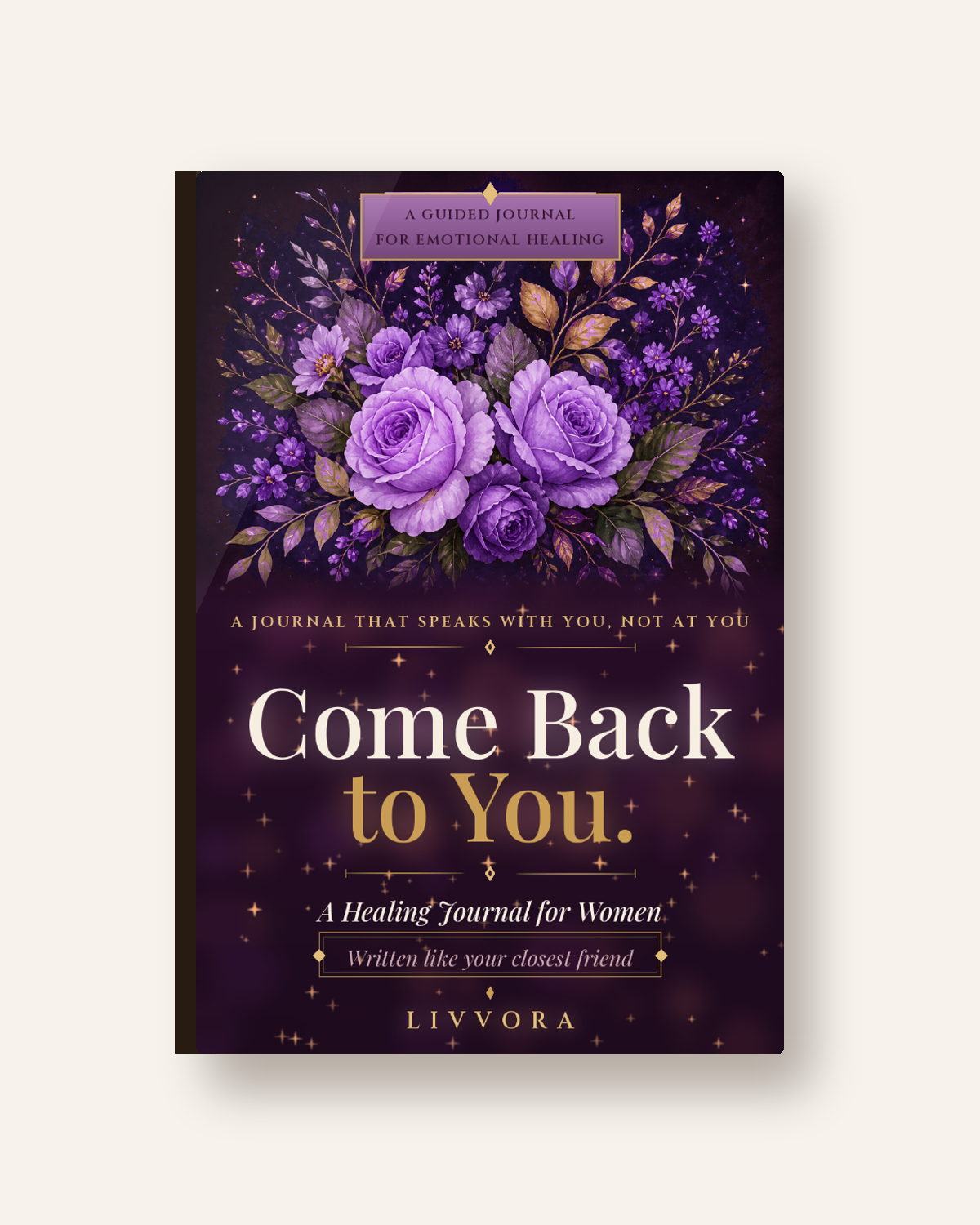
    If you want prompts with room to breathe — a journal that holds your hand instead of judging your answers — this one is ours:

    Come Back to You — A Healing Journal for Women

    THE EBOOK

    Come Back to You

    A guided healing journal in English — deeper prompts, room to write, and a voice that feels like a friend who’s been there. Instant download · $18.99

    Buy now →

    Start free. Download 7 Days to Come Back to You — our free 7-day guided practice — when you subscribe to the newsletter. One gentle page a day. 🤍

  • Cómo empezar un diario de sanación emocional: guía suave para principiantes

    Cómo empezar un diario de sanación emocional: guía suave para principiantes

    Son las 2 de la mañana y la cabeza no se apaga. Sabes que escribir te ayudaría — te lo han dicho tu terapeuta, tu amiga, ese video que viste — pero abres la libreta y no sabes qué poner. La página te mira. La cierras.

    Eso no significa que no sirvas para esto. Significa que nadie te enseñó cómo se empieza. Un diario de sanación emocional no es tarea ni rendimiento — es una conversación suave contigo misma. Aquí va la guía que me hubiera gustado recibir al principio.

    ¿Qué es un diario de sanación emocional?

    Es un espacio privado donde escribes lo que sientes sin corregirlo. No es un diario de productividad ni una lista de pendientes: es escritura terapéutica. Los estudios sobre escritura expresiva llevan décadas mostrando que poner las emociones en palabras reduce el estrés, ayuda a procesar lo difícil y hasta mejora el sueño.

    La diferencia entre una libreta cualquiera y un diario de sanación es la estructura: preguntas guiadas que te abren la puerta en los días en que no sabes qué decir. Por eso un diario guiado es más fácil de sostener que una página en blanco.

    Cómo empezar en 3 pasos suaves

    1. Baja la exigencia. No necesitas escribir todos los días, ni llenar la página, ni tener linda letra. Cinco minutos valen. Una frase vale.

    2. Elige un solo lugar. La libreta vive junto a tu cama o en tu bolso — donde sea, pero siempre ahí, para que encontrarla no sea una excusa.

    3. Empieza por lo pequeño. Antes de las preguntas grandes (“¿qué siento?”), las concretas: ¿qué me pesó hoy?, ¿qué necesito esta noche?, ¿qué le diría a la niña que fui?

    Quote card LIVVORA

    5 prompts para tu primera semana

    Lunes — ¿Qué emoción me visitó hoy y qué quería decirme?
    Martes — ¿Qué me pesó esta semana que todavía no he soltado?
    Miércoles — ¿En qué momento me sentí más yo misma esta semana?
    Jueves — ¿Qué le diría a la niña que fui, con la paciencia que hoy tengo?
    Viernes — ¿Qué necesito dejar de exigirme este fin de semana?

    En los días difíciles

    Cuando duele demasiado, cambia “¿qué siento?” por “¿dónde lo siento en el cuerpo?”. Describir la sensación — el nudo, el calor, el hueco — baja la intensidad sin pedirte que la entiendas. Y si un día no puedes escribir, solo sosten la libreta un momento. Sigue siendo sanación.

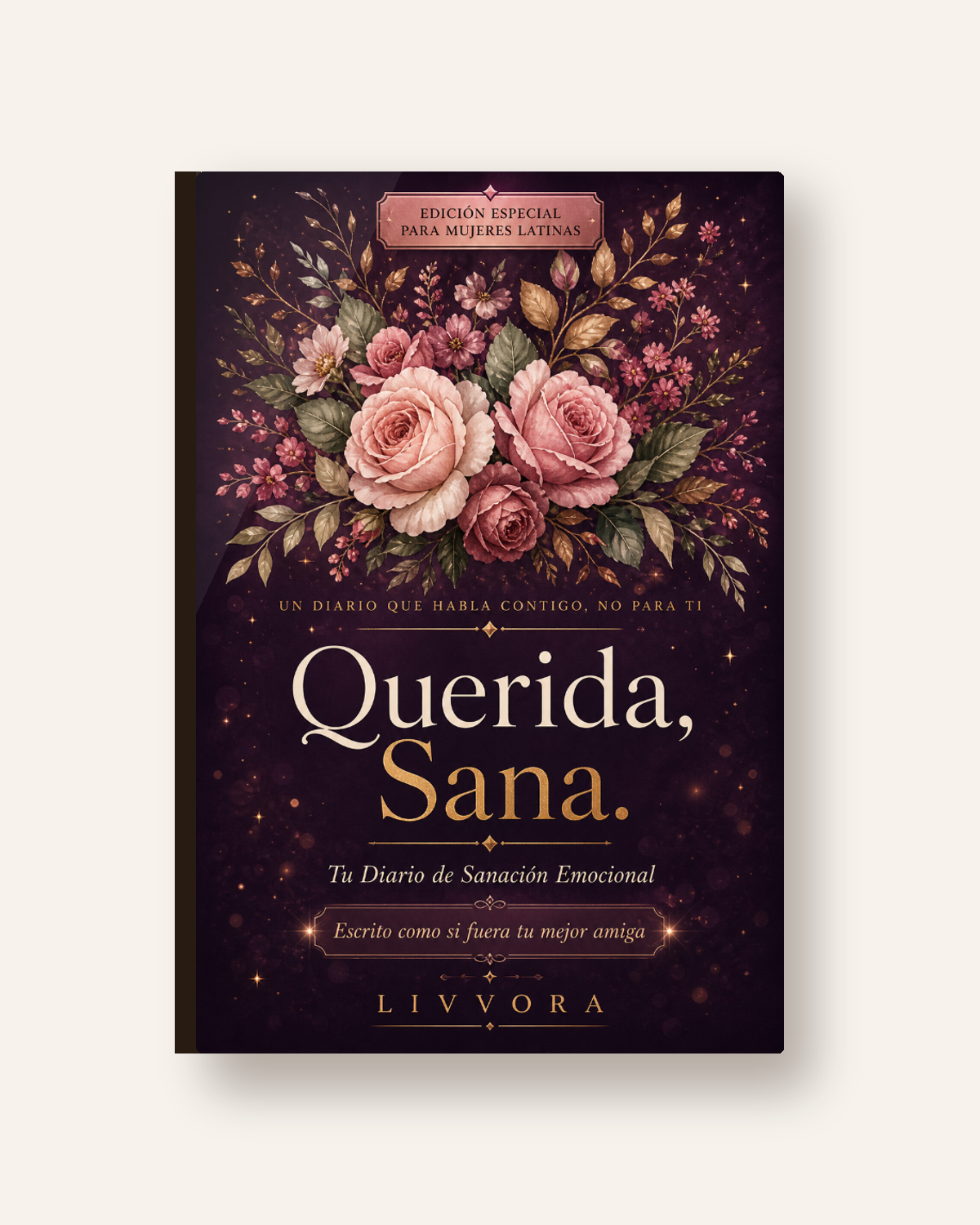
    Si quieres una estructura que ya viene pensada para esto — cartas, prompts y espacios calmados, en español — este es nuestro diario guiado:

    Querida, Sana. — Diario de Sanación Emocional

    EL EBOOK

    Querida, Sana.

    El diario guiado de sanación emocional en español — 60 páginas de cartas, prompts y espacios para escribir, pensados para mujeres latinas que están aprendiendo a no abandonarse. Descarga instantánea · $18.99

    Comprar ahora →

    Tus primeras páginas son gratis. Suscríbete al newsletter y te enviamos las primeras páginas de Querida, Sana. para que la pruebes antes de comprar — sin compromiso, con mucho cariño. 🤍

  • Cómo identificar mis sentimientos: guía para entender lo que sientes y sanar

    Hay días en los que despiertas con un peso invisible en el pecho. No ha pasado nada grave ni hay un problema evidente, pero sientes un nudo sordo en el estómago o una tensión apretada en la garganta. Te preguntas qué te pasa y la respuesta rápida que le das a los demás —y a ti misma— es un cansino «no sé, me siento rara» o «solo estoy cansada».

    La realidad, sis, es que no estás simplemente cansada. Lo que ocurre es que estás experimentando una acumulación de sentimientos a los que nunca les has puesto nombre. Vivimos corriendo, resolviendo pendientes y cuidando a otros, mientras archivamos nuestro mundo interior. Pero lo que no se nombra no desaparece; se acumula en el cuerpo y se transforma en ansiedad, apatía o irritabilidad.

    Aprender cómo identificar mis sentimientos no es un ejercicio cursi: es la base indispensable de la sanación emocional. Cuando le das un nombre preciso a lo que habita en tu pecho, le quitas el poder de abrumarte en la sombra y comienzas a recuperar tu paz mental.


    Por qué nos enseñaron a no nombrar lo que sentimos

    Para entender por qué resulta tan difícil responder a la pregunta «¿cómo me siento hoy?», hay que mirar atrás. A muchas de nosotras nos criaron en entornos donde ciertas expresiones emocionales no eran bien recibidas.

    Desde pequeñas escuchamos frases como «no llores, no es para tanto», «sé fuerte», «no te enojes» o «tienes que ser comprensiva». Aprendimos rápido la lección: mostrar incomodidad molestaba a los demás, exigir límites nos hacía parecer egoístas y expresar tristeza nos volvía vulnerables.

    Como respuesta de supervivencia, las mujeres aprendemos a enfocar nuestro radar en las necesidades ajenas, apagando el propio. Aprendemos a reprimir el enojo para evitar conflictos y a enmascarar la tristeza detrás de una sonrisa funcional.

    Sin embargo, la mente puede intentar engañarse, pero la biología no miente. Reprimir lo que sientes mantiene tu sistema nervioso en alerta constante. La falta de vocabulario emocional no es un fallo personal, sis; es el resultado de un condicionamiento social que nos enseñó a complacer antes que a sentir.


    La diferencia entre emoción y sentimiento explicada simple

    Suele usarse ambos términos como sinónimos, pero entender la distinción entre emoción y sentimiento es un paso gigante para aliviar la carga mental.

    • La emoción es visceral y corporal. Es una respuesta biológica e inmediata ante un estímulo. Ocurre de forma automática: la descarga de adrenalina ante un susto o el calor en el rostro ante una injusticia. Las emociones son intensas, duran poco tiempo y se sienten en el cuerpo.
    • El sentimiento es la construcción mental consciente. Es el significado que le asignas a esa emoción junto con tus pensamientos y recuerdos. Mientras la emoción es la ola inicial que te sacude, el sentimiento es la marea que permanece cuando procesas esa ola.

    Por ejemplo, la emoción básica ante una crítica puede ser rabia o miedo. Si alimentas esa respuesta con pensamientos como «nunca hago nada bien», esa emoción se transforma en un sentimiento duradero de inseguridad, resentimiento o desvalorización.

    Entender esto te da poder: la emoción no la puedes evitar porque es un reflejo, pero el sentimiento sí puedes observarlo, cuestionarlo y sanarlo una vez que aprendes a identificarlo.


    Cómo nombrar lo que sientes: el método de las 3 preguntas

    Cuando sientas esa neblina interna en la que solo sabes que «algo anda mal», no intentes resolver todo de golpe. Respira profundo y aplica este método sencillo de tres preguntas:

    1. ¿Qué siento en el cuerpo?

    Las emociones dejan huella física. Cierra los ojos y escanea tu cuerpo sin juzgar:
    * ¿Tienes opresión en el pecho o falta de aire?
    * ¿Hay un nudo en la garganta o la mandíbula apretada?
    * ¿Sientes pesadez en los hombros o malestar en el estómago?

    Identificar la ubicación física te saca del bucle mental y te conecta con el presente.

    2. ¿Cuándo empezó y qué ocurrió justo antes?

    Rastrea el origen. A veces la molestia explota por la tarde, pero el detonante ocurrió por la mañana: un comentario cortante, un mensaje sin responder o haber dicho «sí» cuando pedías descansar. Identificar el hecho despeja la confusión.

    3. ¿A qué le tengo miedo en este momento?

    Detrás de sentimientos incómodos como la rabia o la apatía, casi siempre hay un miedo oculto. Pregúntate sin filtros: ¿tengo miedo al rechazo, a la soledad, al fracaso o a no ser suficiente? Al descubrir el miedo raíz, el sentimiento revela su verdadero mensaje.


    Vocabulario emocional básico: 22 sentimientos y sus matices

    No es lo mismo sentirte sola que sentirte abandonada, ni sentirse enojada que defraudada. Usar la palabra exacta libera tensión porque demuestra a tu cerebro que comprendes lo que vives.

    Aquí tienes 22 sentimientos frecuentes con sus matices:

    1. Sola: Sensación de falta de compañía o conexión puntual.
    2. Abandonada: Sentimiento profundo de que alguien importante te retiró su apoyo.
    3. Incomprendida: Sentir que expresas tu verdad pero los demás no captan tu dolor.
    4. Melancólica: Tristeza suave acompañada de nostalgia por el pasado.
    5. Agotada emocionalmente: Falta de energía mental para procesar vivencias.
    6. Desconsolada: Tristeza aguda donde sientes que nada alivia la pérdida.
    7. Insegura: Duda constante sobre tus capacidades, tu valor o tu lugar.
    8. Expuesta: Sentirte vulnerable, como si tus fallas estuvieran a la vista.
    9. Abrumada: Sentir que la cantidad de tareas o emociones supera tu capacidad.
    10. Impotente: Frustración de ver una situación injusta y no poder cambiarla.
    11. Ansiosa: Inquietud persistente enfocada en un futuro incierto.
    12. Resentida: Guardar un dolor antiguo que se ha agriado con el tiempo.
    13. Herida: Punzada directa provocada por una traición o palabra hiriente.
    14. Defraudada: Vacío cuando una expectativa alta sobre alguien no se cumple.
    15. Frustrada: Rabia cuando un obstáculo se interpone entre tú y tu meta.
    16. Juzgada: Tensión al percibir que otros evalúan o critican tus actos.
    17. Apatía: Falta de interés por cosas que antes te gustaban.
    18. Culpable: Sensación de haber actuado en contra de tus valores.
    19. Avergonzada: Deseo de desaparecer tras percibir una falla propia ante otros.
    20. Saturada: Cuando la exigencia externa o interna sobrepasa tu límite.
    21. Invisibilizada: Percepción de que tu presencia o voz no son tomadas en cuenta.
    22. Desorientada: Sentir que has perdido el rumbo claro en una etapa de cambio.

    Journaling como descarga: cómo escribir lo que sientes sin filtrar

    Saber nombrar lo que sientes es el primer paso; sacarlo de tu cabeza es el segundo. Aquí es donde el journaling se convierte en tu herramienta más valiosa.

    Olvídate de diarios perfectos, sis. El journaling de descarga no es para mostrarlo a nadie; es un espacio de liberación bruta.

    La técnica de descarga mental libre

    1. Escribe 10 minutos sin parar: Toma cuaderno y papel. Escribe exactamente lo que pasa por tu mente, aunque sean frases sueltas.
    2. Desactiva la censura: Si sientes rabia, escríbela. Si hay celos o vergüenza, vuelcalos al papel. El papel lo aguanta todo. Sacar tu sombra evita que actúe en tu vida diaria.
    3. Sin correcciones: No te preocupes por la gramática. Permítete garabatear o tachar.
    4. Cierra con una respiración: Al terminar, inhala profundo y reconoce que diste el primer paso para procesar lo que sientes.

    10 Prompts de journaling para explorar tus sentimientos

    Usa estas preguntas para guiar tu sesión de introspección:

    1. ¿Qué emoción he intentado evitar esta semana y por qué me da miedo sentirla?
    2. Si la opresión en mi cuerpo pudiera hablar, ¿qué me diría hoy?
    3. ¿En qué momentos de la semana me sentí más desconectada de mí misma?
    4. ¿Qué necesidad no atendida está detrás del malestar que siento ahora?
    5. ¿A quién necesito ponerle un límite claro para proteger mi paz?
    6. ¿Qué historia me estoy contando sobre esta situación que aumenta mi frustración?
    7. ¿Cuándo fue la última vez que me permití llorar sin sentir culpa?
    8. ¿Qué sentimiento estoy cargando por intentar cumplir expectativas ajenas?
    9. ¿Cómo puedo tratarme con más amabilidad en este preciso instante?
    10. ¿Qué pequeño paso puedo dar hoy para brindarme el apoyo que busco fuera?

    Tu espacio seguro para sanar

    Identificar tus sentimientos requiere práctica y compasión. Es un camino de valentía, pero no tienes que recorrerlo sola.


    Querida, Sana. Premium Bundle

    Tu espacio seguro para procesar y sanar lo que sientes

    Transforma la confusión emocional en paz interior. Descubre el ‘Querida, Sana.’ Premium Bundle ($29) con 128 páginas de ejercicios prácticos, preguntas de autorreflexión y guía suave para volver a ti.

    Consigue el Bundle Premium ($29) →

    Recuerda, sis: tus sentimientos no son tus enemigos. Son brújulas internas que te señalan dónde sanar para volver a ti. 🌸

  • A 10-Minute Morning Journaling Routine for Emotional Stability

    A 10-Minute Morning Journaling Routine for Emotional Stability

    Your morning can set your emotional temperature for the whole day. Not because mornings are magic — because they’re usually the only ten minutes that belong entirely to you. A simple morning journaling routine gives your mind somewhere to put its noise before it puts it everywhere else.

    The 10-minute routine

    Minutes 1–2 · Brain dump. Before coffee, before phone. Write everything circling your head — worries, to-dos, random thoughts. Messy is the point. You’re transferring the noise out of your skull.

    Minutes 3–5 · Name one feeling. Under the noise there’s usually one real feeling — dread, excitement, tiredness, hope. Name it. “I’m nervous about today’s meeting and underneath that, I’m tired.” Naming an emotion literally reduces its intensity.

    Minutes 6–8 · One intention, one sentence. Not a to-do list. One sentence: “Today I protect my peace” or “Today I finish the thing I keep postponing.” You are choosing your day’s direction before the world chooses it for you.

    Minutes 9–10 · Read yesterday’s intention. A tiny moment of continuity — proof you keep promises to yourself. That, over weeks, is how emotional stability is actually built.

    Why this works

    Stability isn’t the absence of hard feelings. It’s having a place to put them, every day, before they pile up. Ten minutes of journaling won’t make life calmer — it makes you calmer inside whatever life is doing. For a deeper 21-day structure, Emotional Stability Over Intensity was designed exactly for this: steady, honest, un-dramatic healing.

    Start tomorrow. Notebook by the coffee maker, phone in another room. Ten minutes — you have them.