Category: Healing

Guided healing: prompts, rituals and honest words for coming back to yourself.

  • Anxiety Journal Prompts for Women — 30 Guided Prompts to Calm Anxious Thoughts

    If your chest feels tight just reading this, you’re exactly who this guide is for. An anxiety journal is not about fixing yourself overnight — it’s a daily place to put the worry down, look at it honestly, and take your steering wheel back. This is everything we’ve learned building our 30-day anxiety journal for women: what actually helps, how to start tonight, and 30 prompts that make 2 a.m. feel less alone.

    What anxiety actually is (a smoke detector, not a verdict)

    Deep in your brain sits the amygdala — a smoke detector that never went to school. It can’t tell the difference between a bear, a text left on read, and a to-do list. When it senses threat, real or remembered, it floods you with adrenaline: racing heart, tight chest, spiraling thoughts. That’s an anxiety response. It’s your body trying to protect you with the tools it has.

    So anxiety is not weakness, and it’s not you. It’s an alarm — sometimes false, sometimes honest. Either way the answer is the same three-step rhythm we use throughout the journal: notice (name what you’re feeling and where), soften (ground the body first), respond (look at the worry on paper and choose the smallest honest next step).

    One honest note: a journal is a powerful practice, but it is not therapy. If your anxiety feels unbearable, please tell a professional too. Both things can be true: you deserve support, and you can learn to steady yourself.

    Tools to try before you write

    • The 5-4-3-2-1 walk: name 5 things you can see, 4 you can feel, 3 you can hear, 2 you can smell, 1 you can taste.
    • Box breathing: in for 4, hold 4, out 4, hold 4. Longer exhales calm the vagus nerve even faster: in 4, out 8.
    • The control circle: inside, only what you control today. Outside, everything else. Worrying about the outside circle is renting an apartment in a house you don’t own.
    • The worry window: give worry a 10-minute daily appointment. Outside that window, it waits. Most worries lose interest waiting.

    30 anxiety journal prompts for loud nights

    Write messy. Anxious hands are allowed. Try one tonight:

    1. Name the worry in one sentence. Just naming it starts to shrink it.
    2. Where do you feel anxiety in your body — jaw, chest, stomach? Say hello to it.
    3. What is this worry trying to protect you from? Thank it, then tell it the plan.
    4. Write the catastrophe your mind is rehearsing. Now rate how likely it honestly is.
    5. What would you tell your best friend if she had this exact thought?
    6. One thing in your control today. One thing out of it. Release the second one.
    7. What did worry stop you from doing this week? Was it really dangerous?
    8. Write today’s worry as a dramatic headline. Then write the boring, likelier version.
    9. What’s one boundary that would lower your baseline anxiety this month?
    10. List three physical signs that you’re safe right now (warm hands, slow blink, full lungs).
    11. Whose voice does your inner critic sound like? It might not even be yours.
    12. What did you do today that your anxiety said you couldn’t?
    13. What is “enough” for today? Define it before your anxiety defines it for you.
    14. What are you avoiding — and what’s the first step, made 50% smaller?
    15. Write your anxiety’s favorite line. It’s usually an old greatest hit, not news.
    16. What does “calm” look like in your body? Describe the last time you felt it.
    17. Worry window: after 10 scheduled minutes, what remains worth worrying about?
    18. What does your anxiety make you believe about yourself? Answer with evidence.
    19. Where did you feel peace this week, even for a minute? Revisit it in writing.
    20. Write a goodbye letter to one specific worry you’ve outgrown.
    21. Which nervous habit (scrolling, biting, checking) would you soften this week?
    22. Describe your safe place in full sensory detail. Your body can visit it anytime.
    23. What’s the kindest thing someone said to you during a hard season?
    24. Tomorrow’s forecast, written by your wisest self instead of your anxious self.
    25. What have you never told anyone about your anxiety? This page doesn’t have to be shown.
    26. Panic is a wave: it peaks in about ten minutes, then it breaks. Time yourself next time.
    27. Half of anxiety is replaying. Close the replay tab tonight.
    28. Ask: is this a problem to solve, or a feeling to feel?
    29. One small thing your future self will thank you for. Do that.
    30. Write a short letter to a woman whose chest is tight tonight, the way you wish someone had written to you.

    Why writing beats thinking

    Worry thrives in loops — it replays because it never gets an ending. Writing gives each loop a beginning, middle and verdict. That’s why anxiety shrinks on paper: you can’t spiral and write at the same time; the hand is slower than the panic, and slowness is exactly what calms the nervous system down.

    If you want the full structure — grounding toolkit, 30 daily check-ins with an anxiety meter, weekly pattern pages — The Anxiety Journal for Women is a 39-page instant PDF, $14.99. Steady, not numb.

    And if what you feel is more tiredness than worry, our gratitude journal prompts guide might be the softer place to start.

  • What to Write When You Don’t Know What to Say: 25 Gentle Journal Prompts for Hard Days

    What to Write When You Don’t Know What to Say: 25 Gentle Journal Prompts for Hard Days

    Hard days are usually the days you least feel like journaling — and the days it helps the most. But when you finally sit down, the page is blank and your mind is loud. So you close the notebook and think: I’ll do it tomorrow.

    Here’s the truth nobody tells you: you don’t need to know what to say. You just need one honest sentence to start. That’s what these prompts are — doors you can walk through when the blank page feels like a wall.

    First, the only three rules

    1. No rules about quantity. One line counts. A messy paragraph counts. Ugly handwriting counts.

    2. No editing yourself. Nobody is grading this. Swearing is allowed. Contradictions are allowed.

    3. Five minutes is enough. Set a timer. When it rings, stop — even mid-sentence. Ending with an appetite makes tomorrow easier.

    Quote card LIVVORA

    25 prompts, grouped by what today feels like

    When everything feels like too much (1–5)
    1. What is actually the heaviest thing right now — and what is just noise around it?
    2. If today were a weather report, what’s the forecast inside me?
    3. What can I take off my plate this week without the world ending?
    4. Who could I ask for help, and what would I actually say?
    5. What would “enough” look like today?

    When you’re angry (6–10)
    6. Write the unsent text. The whole thing.
    7. What boundary got crossed — and whose job was it to protect it?
    8. What is the anger protecting underneath itself?
    9. What do I need to say out loud, even if no one hears it?
    10. How would I want to feel about this in a year?

    When you miss someone (11–15)
    11. What do I miss most — the person, or a version of us?
    12. What did that season of my life give me that I still carry?
    13. If they could see me now, what would I want them to know?
    14. What did I never get to say? Say it here.
    15. What is still possible for me, even with this absence?

    When you feel behind (16–20)
    16. Behind whom, exactly? Whose timeline am I measuring against?
    17. What have I survived that isn’t visible on any résumé?
    18. What would I tell a friend who feels this way?
    19. What’s one thing from five years ago that I’ve completely healed?
    20. What does “my own pace” mean, in concrete terms?

    When you can’t sleep (21–25)
    21. What thought keeps circling? Write it down — it can’t circle while it’s on paper.
    22. What am I afraid might happen tomorrow? And what would I do if it did?
    23. What is one true, small, good thing about today?
    24. What does my body need right now — water, darkness, a hug, silence?
    25. What can I hand over until morning?

    Keep this list close. On the hard days, you don’t need a method — you need a door.

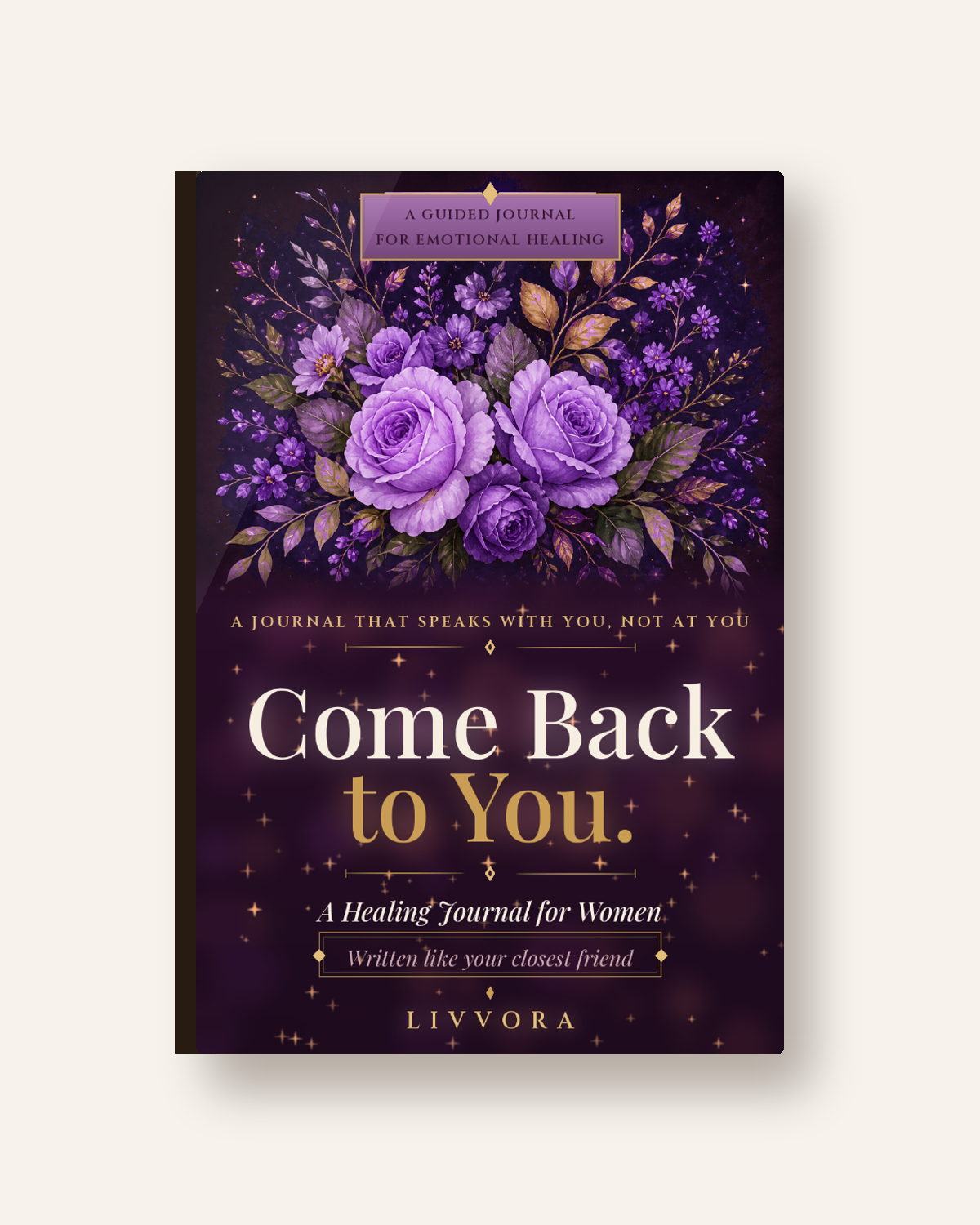
    If you want prompts with room to breathe — a journal that holds your hand instead of judging your answers — this one is ours:

    Come Back to You — A Healing Journal for Women

    THE EBOOK

    Come Back to You

    A guided healing journal in English — deeper prompts, room to write, and a voice that feels like a friend who’s been there. Instant download · $18.99

    Buy now →

    Start free. Download 7 Days to Come Back to You — our free 7-day guided practice — when you subscribe to the newsletter. One gentle page a day. 🤍

  • Cómo empezar un diario de sanación emocional: guía suave para principiantes

    Cómo empezar un diario de sanación emocional: guía suave para principiantes

    Son las 2 de la mañana y la cabeza no se apaga. Sabes que escribir te ayudaría — te lo han dicho tu terapeuta, tu amiga, ese video que viste — pero abres la libreta y no sabes qué poner. La página te mira. La cierras.

    Eso no significa que no sirvas para esto. Significa que nadie te enseñó cómo se empieza. Un diario de sanación emocional no es tarea ni rendimiento — es una conversación suave contigo misma. Aquí va la guía que me hubiera gustado recibir al principio.

    ¿Qué es un diario de sanación emocional?

    Es un espacio privado donde escribes lo que sientes sin corregirlo. No es un diario de productividad ni una lista de pendientes: es escritura terapéutica. Los estudios sobre escritura expresiva llevan décadas mostrando que poner las emociones en palabras reduce el estrés, ayuda a procesar lo difícil y hasta mejora el sueño.

    La diferencia entre una libreta cualquiera y un diario de sanación es la estructura: preguntas guiadas que te abren la puerta en los días en que no sabes qué decir. Por eso un diario guiado es más fácil de sostener que una página en blanco.

    Cómo empezar en 3 pasos suaves

    1. Baja la exigencia. No necesitas escribir todos los días, ni llenar la página, ni tener linda letra. Cinco minutos valen. Una frase vale.

    2. Elige un solo lugar. La libreta vive junto a tu cama o en tu bolso — donde sea, pero siempre ahí, para que encontrarla no sea una excusa.

    3. Empieza por lo pequeño. Antes de las preguntas grandes (“¿qué siento?”), las concretas: ¿qué me pesó hoy?, ¿qué necesito esta noche?, ¿qué le diría a la niña que fui?

    Quote card LIVVORA

    5 prompts para tu primera semana

    Lunes — ¿Qué emoción me visitó hoy y qué quería decirme?
    Martes — ¿Qué me pesó esta semana que todavía no he soltado?
    Miércoles — ¿En qué momento me sentí más yo misma esta semana?
    Jueves — ¿Qué le diría a la niña que fui, con la paciencia que hoy tengo?
    Viernes — ¿Qué necesito dejar de exigirme este fin de semana?

    En los días difíciles

    Cuando duele demasiado, cambia “¿qué siento?” por “¿dónde lo siento en el cuerpo?”. Describir la sensación — el nudo, el calor, el hueco — baja la intensidad sin pedirte que la entiendas. Y si un día no puedes escribir, solo sosten la libreta un momento. Sigue siendo sanación.

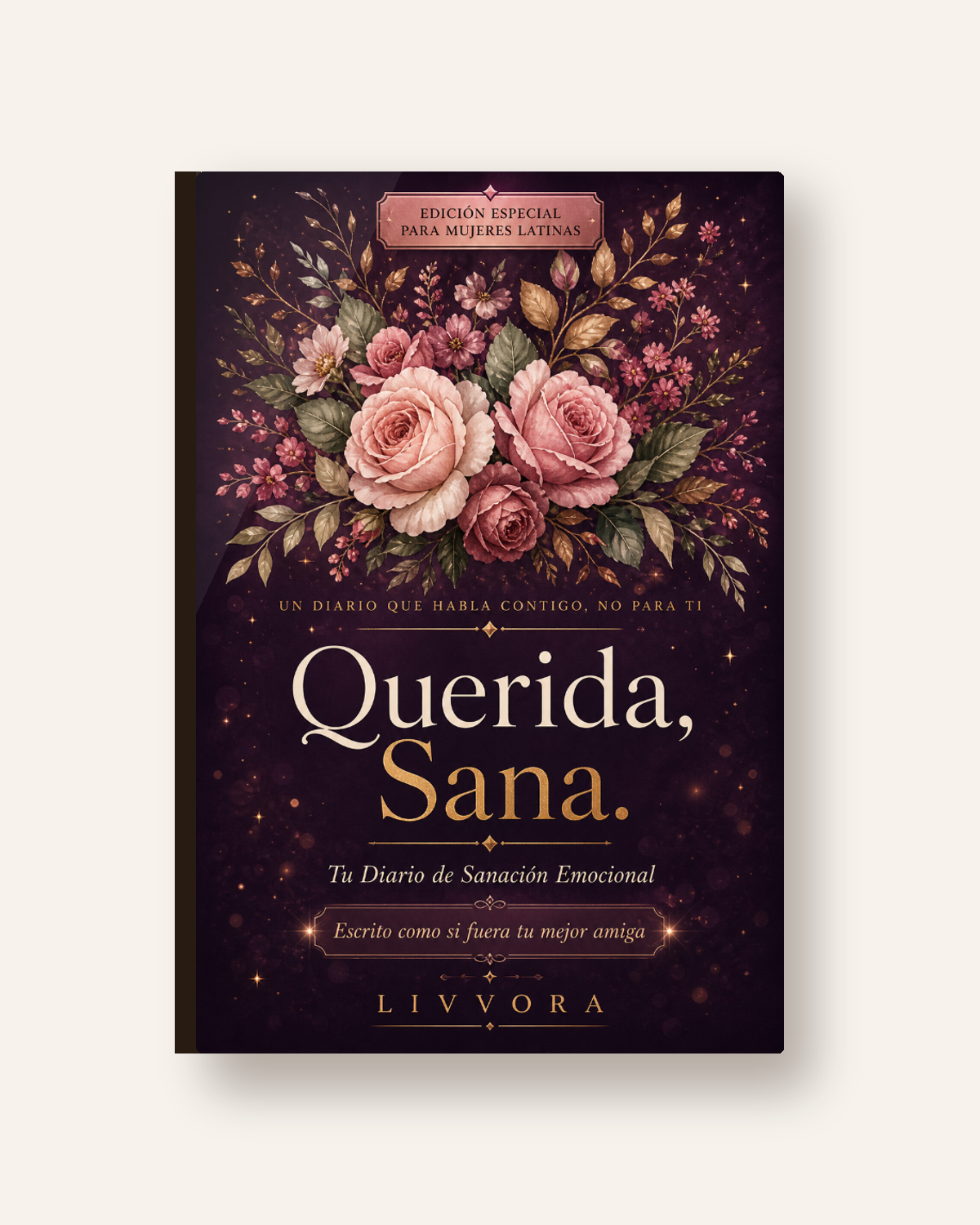
    Si quieres una estructura que ya viene pensada para esto — cartas, prompts y espacios calmados, en español — este es nuestro diario guiado:

    Querida, Sana. — Diario de Sanación Emocional

    EL EBOOK

    Querida, Sana.

    El diario guiado de sanación emocional en español — 60 páginas de cartas, prompts y espacios para escribir, pensados para mujeres latinas que están aprendiendo a no abandonarse. Descarga instantánea · $18.99

    Comprar ahora →

    Tus primeras páginas son gratis. Suscríbete al newsletter y te enviamos las primeras páginas de Querida, Sana. para que la pruebes antes de comprar — sin compromiso, con mucho cariño. 🤍

  • Cómo sanar emocionalmente: Tu guía honesta para florecer a tu propio ritmo

    Si llegaste hasta aquí buscando cómo sanar emocionalmente, quiero que hagas una pausa, exhales profundo y sueltes los hombros, sis. Sé exactamente dónde estás. Sé lo que es sentir ese peso invisible en el pecho, esa sensación de estar fragmentada o de llevar un cansancio que el sueño de ocho horas simplemente no logra quitar.

    A veces la vida nos golpea de formas discretas pero profundas: una ruptura que no esperabas, una pérdida que dejó un vacío silencioso, o años de postergar tus propias necesidades para cuidar a los demás. En medio de esa tormenta, es normal preguntarte cómo sanar, por dónde se empieza o si algún día volverás a sentir la ligereza en el alma que tenías antes.

    Tómate esto como una conversación tranquila entre tú y yo, de querida amiga a querida amiga. Sin discursos perfectos, sin positivismo tóxico y sin fórmulas mágicas. Sanar no ocurre de la noche a la mañana, pero sí ocurre. Y hoy estás dando el primer paso para reencontrarte contigo.


    Qué significa sanar de verdad (y los mitos que debemos derribar)

    Durante mucho tiempo nos han vendido una idea equivocada sobre la sanación emocional. Nos hicieron creer que sanar significa llegar a un estado perfecto donde nada nos duele, donde el pasado desaparece por completo y donde caminamos por la vida con una sonrisa imperturbable las veinticuatro horas del día.

    Pero seamos honestas, sis: eso no es sanar, eso es anestesiarse.

    Sanar NO es:

    • Olvidar lo que sucedió: Tu historia forma parte de lo que eres; no se trata de borrar capítulos, sino de aprender a leerlos sin que te quemen las manos.
    • Dejar de sentir tristeza o rabia: Las emociones no son buenas ni malas, son simplemente señales de tu cuerpo y tu mente.
    • Un proceso lineal: Habrá días de inmensa claridad y días donde sientas que diste tres pasos hacia atrás. Eso no significa que estés fallando; significa que eres humana.

    Sanar SÍ es:

    Sanar de verdad es ampliar tu capacidad para sostener lo que sientes con compasión. Es dejar de pelear contra tu propio dolor y comenzar a preguntarle qué necesita enseñarte. Aprender cómo sanar emocionalmente implica transformar la relación que tienes contigo misma, pasar del juicio severo al abrazo paciente y regalarte el espacio seguro que quizás nunca tuviste en el pasado.


    6 señales silenciosas de que ya estás sanando

    A menudo nos enfocamos tanto en lo lejos que nos falta llegar que no nos damos cuenta de lo mucho que ya hemos avanzado. La sanación rara vez llega con aplausos o grandes revelaciones; casi siempre se manifiesta en pequeñas victorias cotidianas.

    Si te identificas con alguna de estas señales, celebro contigo porque tu proceso de sanar ya ha comenzado:

    1. Tu reacción ante los detonantes ha cambiado: El mismo comentario o situación que antes te provocaba una tormenta emocional ahora produce solo una pequeña brisa. Sigues notándolo, pero ya no destruye tu paz.
    2. Te das permiso de descansar sin culpa: Entiendes que parar no es perder el tiempo, sino un acto de autocuidado fundamental para tu equilibrio mental y espiritual.
    3. Dices “no” con mayor claridad: Estableces límites sanos sin sentir la necesidad de dar explicaciones interminables ni disculparte por proteger tu energía.
    4. Tu voz interior es más amable: Cuando cometes un error, en lugar de criticarte severamente, te hablas con la misma dulzura con la que le hablarías a tu mejor amiga.
    5. Aceptas los días difíciles: Cuando llega la tristeza, no te pones ansiosa por estar triste. Aceptas el día gris sabiendo que las nubes eventualmente van a pasar.
    6. Dejas de buscar aprobación externa para tu dolor: Reconoces que la validez de tus sentimientos no depende de que los demás los entiendan o los confirmen.

    Por dónde empezar: 6 pasos concretos para tu sanación emocional

    Cuando el dolor abruma, saber como sanar se siente como intentar armar un rompecabezas a oscuras. Por eso, necesitamos pasos sencillos y aterrizados que podamos aplicar en nuestro día a día.

    Aquí tienes seis pilares prácticos para iniciar tu camino de sanación:

    1. Sentir antes de arreglar (Feel before fixing)

    Vivimos en una cultura obsesionada con resolver todo de inmediato. Cuando sentimos ansiedad o tristeza, nuestro primer impulso suele ser buscar una distracción rápida o intentar ‘arreglar’ la emoción. Sin embargo, el primer paso para sanar emocionalmente es permitirte sentir. Siéntate con tu emoción durante cinco minutos. Dale un nombre: “Hoy me siento desamparada” o “Tengo rabia”. Darle espacio a la emoción le quita poder sobre ti.

    2. Journaling: vaciar la mente en el papel

    Escribir es una de las herramientas de sanación más poderosas y accesibles que existen. Cuando dejamos los pensamientos guardados en la mente, suelen dar vueltas en bucles infinitos. Al pasarlos al papel, los materializas, los ordenas y les das una salida segura. No necesitas ser escritora; solo necesitas un cuaderno, un bolígrafo y la disposición de vaciar tu corazón sin filtros ni censura. Si no sabes por dónde empezar, explora las herramientas y guided journals en nuestra tienda, creadas específicamente para acompañar cada etapa de tu proceso.

    3. Establecer límites para proteger tu paz

    No puedes sanar en el mismo ambiente o con las mismas dinámicas que te enfermaron. Poner límites no es alejar a la gente por rencor, es construir una cerca alrededor de tu jardín interior para que florezca. Identifica qué personas, hábitos o conversaciones agotan tu vitalidad y empieza a marcar distancia amorosa pero firme.

    4. Conectar con tu cuerpo y regular tu sistema nervioso

    El trauma y el estrés emocional no solo habitan en los pensamientos, se alojan en el cuerpo. La tensión en los hombros, el nudo en el estómago o la respiración entrecortada son señales físicas de dolor acumulado. Camina descalza sobre la hierba, haz estiramientos suaves, abraza un cojín o practica la respiración consciente. Cuidar tu cuerpo le envía la señal a tu cerebro de que en este momento estás a salvo.

    5. Nutrir tu fe y tu conexión espiritual

    En los momentos más oscuros, recordar que hay algo más grande sosteniendo tu vida trae una calma inigualable. La fe no se trata de perfección ni de religiosidad rígida, sino de confianza y refugio. Cuando sientas que tus fuerzas no alcanzan, entrega tus cargas a Dios en oración o meditación. Si necesitas una palabra de aliento personalizada para lo que estás atravesando hoy, te invito a visitar nuestro rincón de versículo del día, donde puedes escribir exactamente cómo te sientes y recibir un mensaje de fe diseñado para abrazar tu emoción en ese instante.

    6. Saber cuándo buscar ayuda profesional

    Sanar no significa hacerlo todo sola. Apoyarte en un terapeuta o psicólogo es una demostración inmensa de valentía y amor propio. La terapia te brinda herramientas personalizadas para procesar heridas profundas y patrones arraigados que son difíciles de desenredar por cuenta propia.


    8 Journaling Prompts para sanar heridas emocionales

    El journaling es un viaje hacia tu interior. Si deseas profundizar en tu proceso de sanación emocional, tómate un momento cómodo, prepara tu bebida favorita y responde con total honestidad a estos interrogantes en tu diario:

    1. ¿Qué emoción he estado intentando ignorar o reprimir durante las últimas semanas?
    2. Si mi dolor pudiera hablar hoy, ¿qué me pediría que hiciera por él?
    3. ¿Qué historia sobre mí misma me sigo contando que ya no me sirve ni refleja quién soy hoy?
    4. ¿A quién o a qué necesito perdonar (incluyéndome a mí misma) para soltar esta pesadez?
    5. ¿Cuáles son tres límites claros que necesito establecer esta semana para cuidar mi paz mental?
    6. ¿De qué manera puedo ser más amable conmigo misma durante los días en que me siento vulnerable?
    7. ¿Qué actividad o momento pequeño de mi rutina me hace sentir genuinamente a salvo y tranquila?
    8. ¿Qué le diría hoy a mi versión más joven si pudiera abrazarla por un minuto?

    Si estás buscando un espacio estructurado y cálido para realizar este ejercicio diariamente, no dejes de visitar nuestro Safe Corner, un rincón creado especialmente para acompañarte con recursos de contención y paz en tus momentos de reflexión.


    Tu proceso es sagrado: florece a tu propio ritmo

    Querida amiga, si te llevas un solo mensaje de este artículo hoy, que sea este: no hay prisa. Tu proceso de sanación no es una carrera contra el tiempo ni una competencia con nadie más. Cada lágrima derramada, cada respuesta consciente y cada límite colocado es una semilla que estás sembrando para tu futuro.

    Habrá días luminosos y días donde el invierno parezca regresar, pero ahora cuentas con más compasión para abrazarte en ambos estados. Estás haciendo el trabajo difícil, y por eso estoy inmensamente orgullosa de ti, sis.


    Querida, Sana. Premium Bundle

    Da el paso decisivo en tu sanación emocional

    Si este artículo resonó en tu corazón, no te quedes solo en la lectura. Empieza hoy tu proceso guiado con el ‘Querida, Sana.’ Premium Bundle ($29): el diario guiado best seller + Self Love Workbook + She Chose Peace (128 págs. en PDF de descarga inmediata).

    Consigue el Bundle Premium ($29) →

    Con todo mi amor y luz,
    LIVVORA 🌸

  • 7 Journal Prompts for Healing After a Breakup

    7 Journal Prompts for Healing After a Breakup

    Some breakups end cleanly. Most don’t. Most end in loops — the replayed conversation, the almost-texts, the 2 a.m. what-ifs. If your head keeps writing its own painful journal entry on repeat, these journal prompts for healing after a breakup give it somewhere better to go.

    7 prompts for the hard nights

    1. What did I ignore in this relationship because I was afraid to be alone?
    2. What did this relationship teach me about what I actually need?
    3. What am I mourning — the person, or the version of the future I invented?
    4. If I loved myself the way I loved them, what would I do this week?
    5. What do I finally have time and energy for now?
    6. What would I say to the version of me from one year ago?
    7. What is one small thing I can do tonight to feel like myself again?

    Answer one per night. Seven nights, one honest page each. By the end of the week you won’t be “over it” — nobody is, that fast — but you’ll have moved the pain out of your head and onto paper, where you can actually look at it.

    When you want a guide instead of a blank page

    Prompts help, but some seasons need a plan. After the Breakup — the 7-Day Glow-Up Plan turns that first raw week into seven concrete days: what to write, what to release, what to rebuild. And if this breakup is pointing you toward a bigger comeback, the breakup recovery journals are all here.

    One more thing, from us to you: healing isn’t linear. Some nights the words come angry, some nights they don’t come at all. Show up anyway. The page keeps no score.

  • How to Start a Healing Journal (When You Don’t Know What to Write)

    How to Start a Healing Journal (When You Don’t Know What to Write)

    You bought the notebook. You sharpened the pencil. You opened the first page… and sat there staring. If you are wondering how to start a healing journal without feeling fake or lost, this is for you.

    Healing journaling isn’t about writing beautifully. It’s about writing honestly. Nobody is grading these pages. The only rule: what you write has to be true for you in that moment.

    Start smaller than you think

    Most people fail at journaling because they start with too much. “I’ll write thirty minutes every night!” — and by Thursday the notebook is a coaster. Begin with five minutes, three times a week. Momentum beats ambition.

    Use prompts, not blank pages

    A blank page asks “what do you feel?” which is often the hardest question in the world. A prompt asks something gentler and gets you moving:

    • What am I tired of carrying?
    • What would I tell my best friend if she felt like this?
    • What does “home” feel like in my body today?
    • What did today ask of me — and what did I give?

    Answer one. Just one. That’s a complete journaling session. If you want a full 21-day journey of honest prompts in Spanish, Querida, Sana. was written exactly for this — like a letter from your best friend, one page a day.

    Write like you talk

    If your inner voice says “honestly I’m just tired and a little lonely” — write that. Healing journals work because they’re private. The moment you start performing on the page, the healing stops. Spelling doesn’t matter. Neither does grammar. This is between you and you.

    Re-read yourself gently

    Once a week, flip back. Notice patterns, not problems. “I write about exhaustion every Tuesday” is information. Information is power. That’s how a journal slowly becomes a mirror — and mirrors, unlike people, never lie to you.

    When you’re ready for structure, browse the guided journals and pick the one that meets you where you are.